For container transport operators, buying a refurbished tractor truck is not only a vehicle-purchasing decision. It is also a logistics, inspection and fleet-readiness decision.
A tractor may look ready for export after repainting and cab refurbishment, but reliable container haulage depends on deeper issues: engine condition, gearbox and clutch performance, fifth-wheel integrity, braking, documentation, shipping preparation and the truck’s ability to enter service after arrival.
For overseas buyers, the most effective approach is to treat sourcing, refurbishment, pre-shipment verification and ocean transport as one connected process.
Match the Tractor to the Container Transport Route
The intended transport route should determine the truck specification before refurbishment begins.
A tractor working between a seaport and a nearby container depot operates differently from one hauling containers several hundred kilometres inland.
Short-distance port operations often involve repeated starting, stopping, reversing and trailer coupling. This places greater emphasis on:
- clutch condition;
- air-pressure recovery;
- steering response;
- fifth-wheel wear;
- brake performance;
- cooling efficiency.
Long-distance container transport places greater importance on engine reliability, gearbox condition, tires, cooling performance, fuel consumption and driver comfort.
Road quality should also be considered. A tractor operating entirely on paved corridors will experience different chassis and suspension loads from one travelling between ports, inland depots, construction areas and partially unpaved roads.
For that reason, buyers evaluating tractor trucks for container haulage should look beyond horsepower and model year. Axle configuration, steering position, drivetrain condition and operating environment are usually more important to long-term fleet performance.
Mechanical Verification Should Come Before Cosmetic Refurbishment
A truck’s exterior appearance should never be the primary measure of refurbishment quality.
Repainting, cab replacement and interior refurbishment can improve presentation, but the components responsible for moving and stopping a container require more attention.
The engine should be inspected for:
- cold-start performance;
- idle stability;
- oil pressure;
- coolant condition;
- abnormal exhaust smoke;
- turbocharger response;
- oil, fuel or coolant leakage;
- abnormal mechanical noise.
The gearbox and clutch should be evaluated during an actual driving test. A stationary inspection cannot reliably reveal clutch slip, difficult gear engagement, driveline vibration or abnormal transmission noise.
Rear axles should also be checked for leakage, bearing condition, differential noise and abnormal heat.
For a tractor truck, the fifth wheel deserves particular attention because it is the direct connection between the tractor and semi-trailer. Locking jaws, mounting bolts, lubrication points, plate wear and excessive clearance should all be checked before shipment.
The practical principle is simple:
Verify the systems that pull, steer and stop the load before evaluating the systems that improve appearance.
Use Measurable Inspection Criteria Wherever Possible
Inspection results become more useful when they are supported by measurements rather than descriptions such as “good condition.”
Workshop criteria vary by model and engine, but refurbished heavy trucks can be assessed using measurable reference points.
| Inspection Area | Practical Workshop Reference |
|---|---|
| Engine compression | Approximately 26–28 bar or above where applicable |
| Warm idle oil pressure | Approximately 0.2 MPa or above |
| Tire tread | 8 mm or more preferred for export preparation |
| Gearbox | Smooth engagement in forward and reverse gears |
| Clutch | No abnormal slipping or engagement vibration |
| Fifth wheel | Secure locking and stable mounting |
| Chassis | No serious cracks, deformation or unacceptable structural repairs |
| Cooling system | Stable operating temperature during extended running |
| Braking | Straight and controlled braking without abnormal pull |
These should be treated as workshop references rather than universal regulatory limits. Exact requirements depend on vehicle configuration, destination-market rules and buyer specifications.
The value of measurable inspection is transparency.
An overseas fleet manager can assess a compression reading, test report, chassis image or road-test video much more effectively than a statement saying the truck has been “completely refurbished.”
Keep a Clear Record of What Was Actually Refurbished
A refurbishment record should distinguish between inspected, repaired, replaced and unchanged components.
This distinction is important because the term “refurbished truck” can describe very different levels of work.
For example, a buyer should be able to determine whether:
- the engine was inspected, repaired or remanufactured;
- the gearbox was serviced or replaced;
- brake linings were changed;
- air hoses were renewed;
- tires were retained or replaced;
- the cab was repaired or changed;
- the fifth wheel was rebuilt;
- structural welding was performed;
- chassis corrosion was treated before repainting.
Before-and-after photographs can provide useful evidence for cab replacement, chassis preparation, suspension work and major drivetrain repairs.
A strong refurbishment record does not need to become a large technical dossier. Its purpose is to make the condition of the vehicle understandable before it leaves the exporting country.
That information may also help the destination workshop prepare maintenance plans and spare-parts inventories.
Separate Refurbishment From Final Pre-Shipment Inspection
The workshop that repairs the vehicle and the process that verifies the finished vehicle should be treated as two different stages.
Completing a repair does not automatically confirm that the truck is ready for international shipment.
A final pre-shipment inspection for used trucks should confirm the agreed specification, operational condition and vehicle identity after refurbishment is complete.
A practical final inspection can cover:
- cold and warm engine starting;
- idle and acceleration behaviour;
- oil pressure;
- forward and reverse movement;
- low- and high-range gear shifting;
- clutch engagement;
- steering response;
- service brake operation;
- parking brake operation;
- air-pressure build-up;
- chassis and suspension condition;
- fifth-wheel locking;
- lights and electrical systems;
- tire condition;
- wheel fasteners;
- visible fluid and air leaks.
A road test is particularly valuable for container-haulage tractors because their daily work normally includes reversing, low-speed manoeuvring and repeated trailer coupling.
Inspect the Fifth Wheel as Part of the Container Transport System
The tractor and trailer should be considered one operating system rather than two separate vehicles.
For container haulage, the fifth wheel is one of the most important mechanical interfaces on the tractor.
The inspection should confirm that the locking mechanism engages correctly and that there is no abnormal movement between the fifth-wheel assembly and the chassis mounting.
The plate should also be checked for excessive wear, damage and insufficient lubrication.
Where possible, coupling performance should be verified with a compatible semi-trailer before shipment.
This is especially important for imported used tractors because a truck that starts, shifts and brakes correctly can still become operationally unsuitable if the coupling system requires immediate repair after arrival.
Plan the Shipping Method Before Final Vehicle Preparation
Ocean transport requirements should influence how the truck is prepared in the workshop.
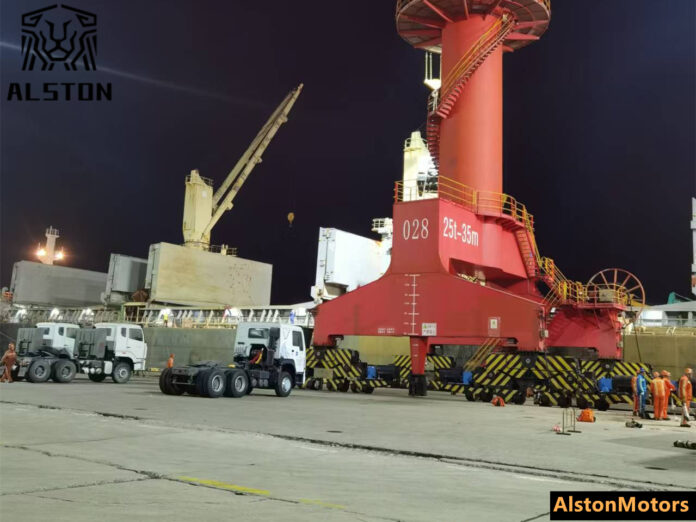
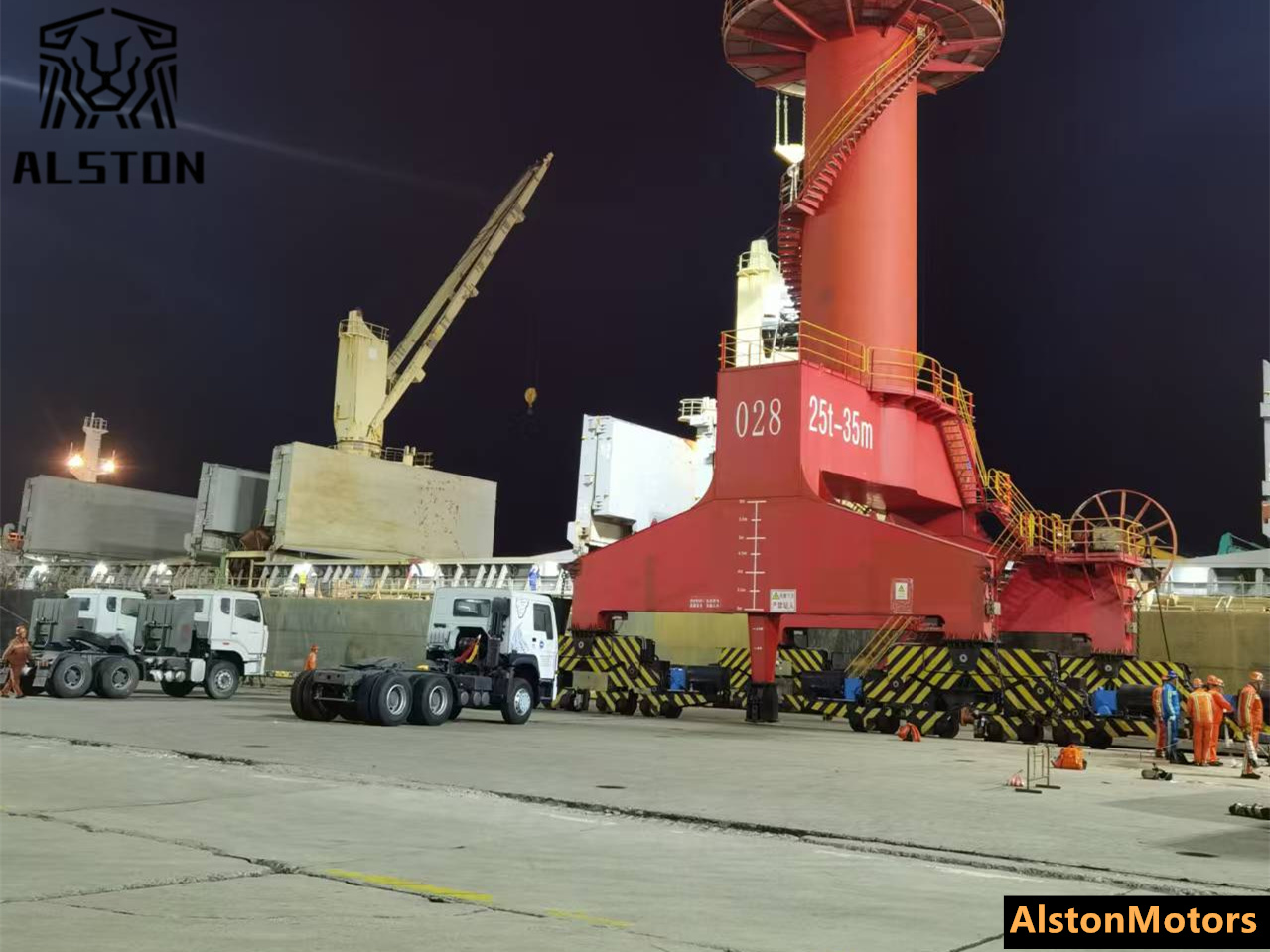
Heavy vehicles may be transported by RoRo, breakbulk or, in some cases, flat-rack equipment depending on dimensions, carrier availability, route and cost.
Each method creates different preparation requirements.
For RoRo transport, the vehicle generally needs to remain capable of controlled movement during terminal and vessel handling. Steering, brakes, battery condition and starting reliability therefore remain important even after mechanical refurbishment has been completed.
Breakbulk transport places greater emphasis on lifting arrangements, securing points and cargo protection.
Flat-rack transport can involve dimensional limitations and additional lashing requirements. Depending on the vehicle configuration, mirrors, exhaust components or other projecting parts may also require preparation.
Choosing the shipping method early reduces the risk of modifying the truck again after it has already passed final inspection.
Make Vehicle Identity Match the Shipping Documents
Documentation errors can delay a technically sound truck just as easily as a mechanical problem can.
Before the vehicle reaches the port, the exporter and buyer should reconfirm that physical identification corresponds with the commercial and shipping documents.
Important information may include:
- chassis or VIN number;
- vehicle model;
- engine information where required;
- exporter details;
- consignee details;
- loading port;
- destination port;
- vehicle quantity;
- invoice description.
The exact documentation package varies by destination market, customs procedure, carrier and inspection requirements.
Where destination countries require pre-shipment inspection or conformity verification, those procedures should be arranged before the truck enters the export terminal.
Correcting a document discrepancy at the workshop is usually easier and less expensive than resolving one after the vehicle reaches the destination port.
Create a Loading Record Before the Truck Leaves for the Port
Photographs and videos taken at dispatch provide a useful final record of vehicle condition.
The loading file can include images of:
- the chassis number;
- front, rear and side condition;
- tires and wheels;
- fifth wheel;
- cabin;
- engine compartment;
- accessories;
- spare parts supplied with the truck;
- loading condition;
- visible securing and lashing.
This creates a clearer chain of evidence between final workshop inspection and ocean shipment.
The process becomes particularly valuable when several visually similar tractors are shipped together. Each truck may have different mechanical history, chassis identification and refurbishment records even if all units receive the same exterior finish.
Evaluate Landed and Service-Ready Cost, Not Only Purchase Price
The lowest vehicle price does not necessarily produce the lowest transport cost.
Importers should consider the truck’s landed and service-ready cost, including:
- purchase price;
- refurbishment;
- inland delivery to the Chinese port;
- export handling;
- ocean freight;
- destination charges;
- duties and taxes where applicable;
- registration;
- initial spare parts;
- repairs required before commercial operation.
Downtime also has economic value.
If a lower-priced tractor requires clutch replacement, tire replacement or gearbox repair shortly after arrival, the cost includes not only parts and labour but also lost trips.
For a container-haulage operator, an unavailable tractor cannot move containers between the terminal, warehouse and inland destination.
Pre-shipment inspection should therefore be viewed as a form of fleet-risk control rather than an unnecessary additional purchasing cost.
Spare Parts Planning Should Begin Before Shipment
Basic spare-parts planning can reduce avoidable downtime during the first operating period.
For refurbished heavy trucks, the initial package often focuses on parts that are relatively inexpensive but may stop the vehicle if unavailable locally.
Typical examples include:
- fuel-water separator filters;
- belts;
- brake linings;
- clutch components;
- wheel hub oil seals;
- wheel bearings;
- universal joints;
- air-brake chamber components;
- air-dryer cartridges;
- relays and fuses.
The correct package depends on truck configuration, local parts availability and fleet size.
For buyers operating several similar tractors, standardising specifications can simplify this process because filters, belts, braking components and other service items can often be shared across the fleet.
Export Readiness Should Mean Operational Readiness
A truck should not be considered fully export-ready simply because it is ready to be loaded on a vessel.
For the importer, the more useful objective is a tractor that can arrive, complete import procedures and begin work with a predictable maintenance requirement.
That requires coordination across the entire chain:
vehicle selection → refurbishment → technical verification → documentation → loading → ocean transport → destination commissioning
At Qingdao Alston Motors, this sequence is used when preparing refurbished heavy trucks for overseas customers because the individual stages are interdependent.
Mechanical inspection cannot compensate for incorrect shipping records. Correct documents cannot compensate for an unverified drivetrain. New paint cannot compensate for a worn fifth wheel.
For container logistics operators, the real value of a refurbished tractor lies in whether its condition, documentation and transport preparation are sufficiently transparent to support reliable commercial operation after arrival.
When each stage can be verified, the truck becomes easier to evaluate not simply as a used vehicle, but as an operating asset within the container supply chain.
Author Bio
Bruce Li is an Export Consultant with Qingdao Alston Motors Co., Ltd, working with refurbished heavy-duty trucks for overseas logistics, construction and transport markets. His work covers vehicle specification, refurbishment coordination, pre-shipment verification, spare-parts planning, export documentation and international shipping preparation.