

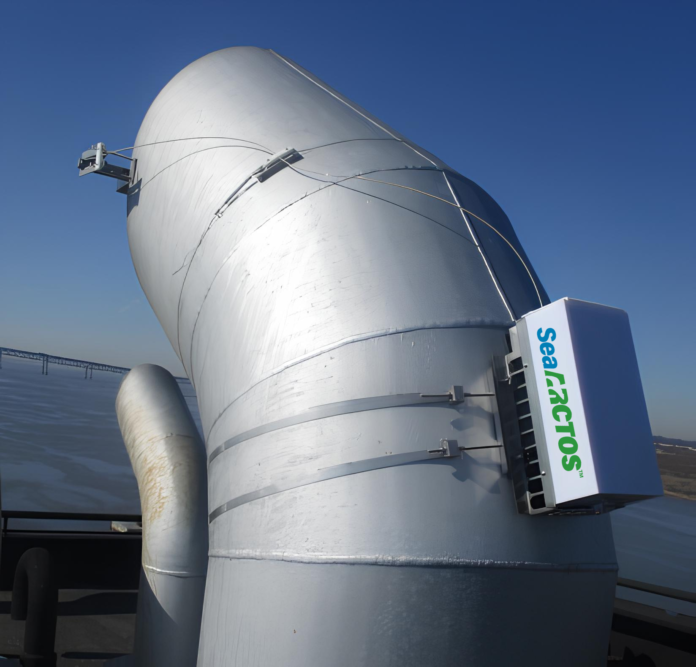
Local pollution is not a problem that can just be regulated and then forgotten about. Without effective emissions monitoring and enforcement, non-compliance is unknown and likely widespread among many shipowners and operators, says Fredrik Fuglesang, CEO of maritime technology company SeaARCTOS.
Local pollution refers to sulphur oxides (SOx), nitrogen oxides (NOx) and particulate matter (PM) like black carbon (soot), rather than greenhouse gas (GHG) emissions like carbon dioxide (CO2) and methane (CH4). Local pollution is particularly harmful to human health, so controlling it, especially in urban ports, is a priority. According to the World Health Organization (WHO), this pollution exacerbates existing conditions like asthma, causes respiratory problems with long-term exposure linked to lung cancer, and increases the risk of heart disease and stroke.
Governments and regulators have responded to these pollution concerns. The IMO introduced the global maritime sulphur cap in 2020, limiting sulphur in marine fuel to 0.5% (down from 3.5% previously). It also incrementally introduced stricter SOx and NOx Emission Control Areas (ECAs). Regional policies, for example in the EU and California, build on this global regulation too. This is valuable global policy, but it is only effective if it’s enforced.
The Baltic Sea, North Sea, and Mediterranean Sea SOx ECAs all overlap with the EU, and the upcoming Norwegian Sea and North-East Atlantic Ocean ones will too. Yet in the EU, only 1,500 vessels were physically inspected for compliance with the 0.1% ECA sulphur limit in 2024, with trust-based documentation accepted for a further 8,500 ships from millions of port calls. With the testing so limited, there is insufficient data to accurately state an actual compliance rate. The same gap applies beyond EU ECAs to the global sulphur cap.
A major problem is ports’ slow, inconsistent, and costly testing processes. Currently, to test for sulphur levels, a fuel sample needs to be taken by a surveyor, which is then sent to an independent lab. This process, which in total may cost several thousand dollars, can also take 10 days to complete. The reality is that, if the sample is found to be non-compliant, the vessel has long since left the port where the sample was taken. Invariably, ports are not in the business of arresting ships in other people’s ports, meaning that there is no recourse. As a result, there is no real incentive for port authorities to invest in a wide-ranging testing programme.
However, there is another way port authorities and flag states can support compliance. It would be fairly straightforward for authorities to mandate that vessels entering their port or flying their flag have an emissions monitoring device installed onboard. These can send direct, encrypted and real-time compliance data to authorities. The added benefit is that this process can remove the cost and administrative burden of compliance checks.
The technology to provide this data and compliance proof from directly from the exhaust stack to the shore exists today, and can help to address another challenge too. Improved testing and compliance involves managing vast amounts of real-time data and generating verifiable, audit-ready documentation. This can be complex, requiring a robust data management system, which systems like SeaARCTOS’ ARCTOS-1™ also provide.
This data can also help ports meet increasing demands from constituents, including local government and pressure groups, for accurate pollution figures and effective controls. Simultaneously, globally, shippers and charterers are demanding more data to meet their own ESG standards, meet and exceed compliance levels, and meet consumer expectations. EU and IMO regulators alike should back this proposal too, ensuring they have data on whether countries are upholding their compliance obligations under MARPOL Annex VI or not.
Integrating testing and compliance protocols into daily maritime operations without creating bottlenecks has been a practical challenge for shipowners and operators for decades, meanwhile ports, shippers, charterers, and Flag States have been held back by the need to collect vast amounts of data. These barriers no longer exist, and the local pollution problem must be accurately monitored and effectively addressed.
Written by: Fredrik Fugelsang
Biography:
Based in London, Fredrik Fugelsang is CEO of SeaARCTOS, a technology company founded by Peter Georgiopoulas and Leonidas Vrondissi of shipowner United Overseas Group. Its ARCTOS-1™ system captures emissions data directly from a ship’s exhaust stack and transmits it to the cloud, helping shipowners, ports, regulators and other stakeholders improve transparency around vessel emissions and compliance. Fred also handles United Overseas’ vessel sales and purchases, so he combines knowledge of direct emissions reporting technology with real ‘on the ground’ understanding of shipowners’ and market needs.