
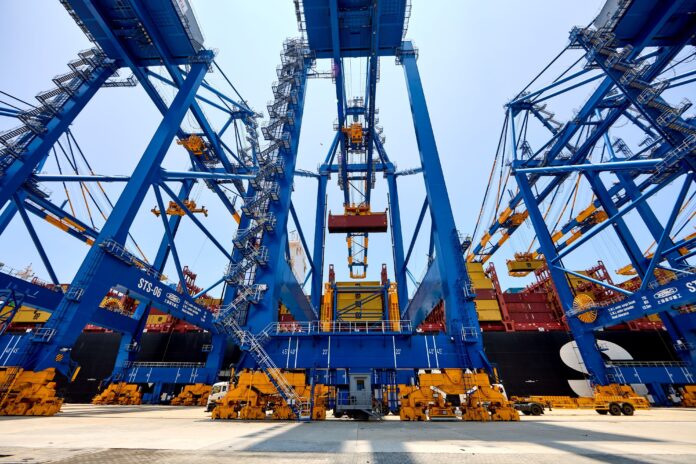
ABB has introduced a new Waterside Automation solution designed to automate quay crane operations at container terminals.
The company said the system reduces reliance on continuous manual control and supports the transition toward autonomous ship-to-shore crane operations.
ABB developed the solution to improve efficiency at container terminals, where quay cranes still depend heavily on manual operation despite wider automation across yard activities.
The Waterside Automation platform combines sensor technology, AI and data analytics to automate container handling operations over the vessel.
The system monitors crane movements, container positions and vessel conditions in real time. It can automatically perform lifting and positioning tasks while adapting to vessel movement and changing weather conditions.
ABB said the solution also improves operational consistency and reduces interruptions caused by manual intervention.
One of the key features allows operators to supervise several quay cranes remotely from an office environment instead of directly controlling individual cranes.
This approach enables terminals to introduce quay crane pooling and improve workforce flexibility.
The system also integrates stowage confirmation, optical character recognition (OCR), digital work instructions and exception handling into a single platform.
ABB noted that similar AI and sensor technologies are already used in semi-autonomous transport systems, but the company adapted the technology specifically for container terminal operations.
“ABB, as a system integrator, is in a unique position to deliver this solution and facilitate a stepwise transition towards autonomous quay crane operations,” said Thomas Kumm, Global Technology Manager, Ports, at ABB’s Marine & Ports division.
“We design and develop our systems to evolve in line with terminal operations and technological development.”