WinGD has completed the world’s first Type Approval Testing (TAT) and Factory Acceptance Testing (FAT) for an ammonia-fuelled two-stroke marine engine. The milestone marks a major step towards zero-carbon shipping.
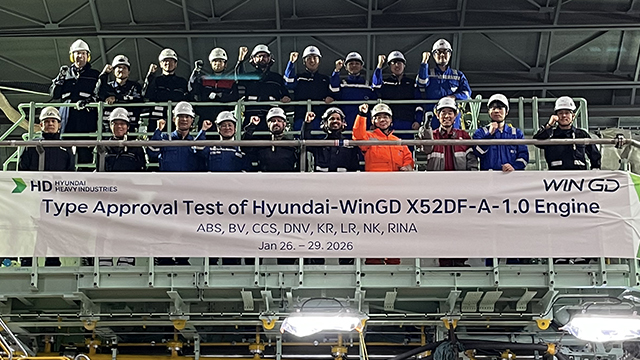
The company finalised the tests in January 2026. It tested the X52DF-A-1.0 engine at the Engine & Machinery Division of HD Hyundai Heavy Industries in South Korea. Lloyd’s Register witnessed the programme. Other major classification societies also attended. EXMAR supervised the process.
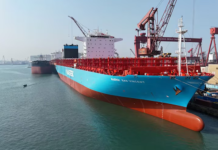
The 52-bore engine will power a 46,000m³ LPG/ammonia carrier ordered by EXMAR. The vessel series will be the first ammonia-fuelled gas carriers to enter commercial service.
WinGD ran a multi-year development and testing programme. The engine delivered strong safety and performance results. It cut NOx emissions well below diesel levels during ammonia operation. It also kept N2O emissions negligible.
Sotiris Topaloglou, Global Head of Testing & Validation at WinGD, said the company tackled safety, control and integration challenges step by step. He said the results prove ammonia propulsion can meet commercial standards.
The X-DF-A engine uses high-pressure ammonia injection. It adds about 5% pilot fuel at full load. The engine matches the load response and fuel efficiency of WinGD’s diesel-fuelled X-Engines in both operating modes.
WinGD has secured orders for around 30 X-DF-A engines. The orders cover gas carriers, bulkers, tankers and container vessels. The company said this confirms rising confidence in ammonia as a marine fuel.
Minho Kang, Head of Marine Engine & Machinery Technical Section at HD Hyundai Heavy Industries, said the tests demonstrate the yard’s leadership in next-generation marine engines.
Kristof Coppé, Director Fleet Operations & Technical Business Development at EXMAR, said the tests mark a key milestone in EXMAR’s ammonia fuel strategy. The company will now prepare for sea trials. It plans to validate full system integration on board in the coming months.
With TAT and FAT complete, the first engines now move closer to commercial service.