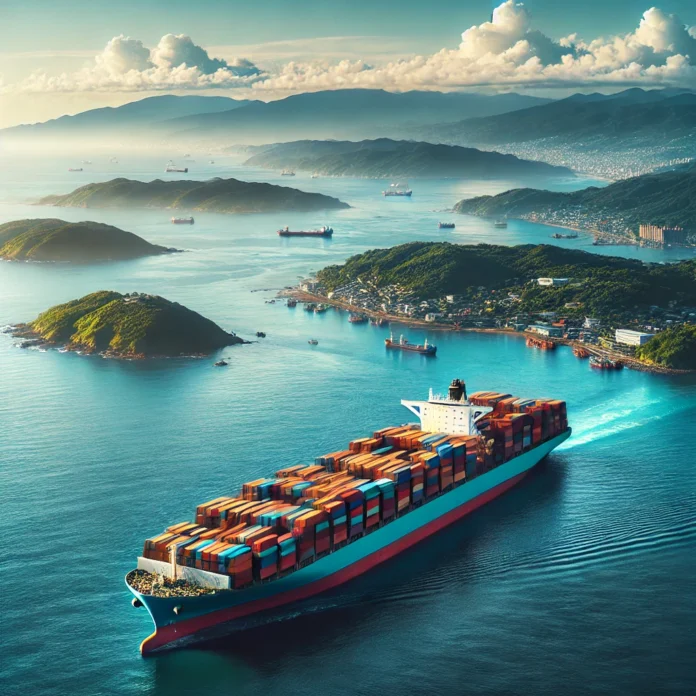
India has formally launched Bharat Container Shipping Line in a calculated wager that current maritime disruptions represent once-per-generation opportunity to break free from transshipment hub dependence and emerge as autonomous Indian Ocean shipping power by 2047.
This content is locked
Select a CN Premium Subscription Package To Unlock The Content!
The joint venture uniting Shipping Corporation of India, Container Corporation of India, and three major port authorities arrives precisely as Red Sea attacks Asia-Europe cargo around the Cape of Good Hope, while new trade agreements with the EU and US promise to double container volumes by 2032.
The timing proves deliberate: India is positioning for permanent route restructuring rather than temporary crisis response.
India recognizes this convergence of disruption, trade fragmentation, and manufacturing relocation won’t repeat for another generation.
The strategic vulnerability driving BCSL proves stark. Approximately 75% of India’s container cargo currently transships through Colombo, Singapore, and Dubai creating dependencies where external powers control critical nodes in Indian trade flows.
For Colombo, this represents existential exposure: Indian cargo constitutes an estimated 50-70% of Sri Lankan port throughput depending on trade lanes.
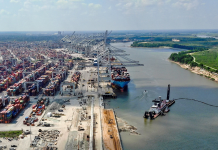
BCSL’s direct services fundamentally challenge this architecture. When Indian vessels connect ports like JNPA, Mundra, and Chennai directly to European and American destinations, cargo no longer requires foreign transshipment.
The economics shift decisively even accounting for longer Cape routing distances eliminating transshipment costs and delays offsets additional nautical miles.
India has committed ₹10,000 crore over five years for domestic container manufacturing capacity, addressing dependency on Chinese-manufactured equipment.
Currently producing 30,000 units annually against China’s 5+ million, India faces the contradiction of relying on Chinese containers to handle trade deliberately designed to reduce Chinese leverage.
The manufacturing initiative targets 150,000+ annual units by completion insufficient to challenge Chinese dominance but adequate for domestic fleet needs and selective regional export.
Container equipment shortages during 2020-2021 demonstrated how scarcity creates artificial capacity constraints even when vessel tonnage remains available. Domestic production insulates India from similar vulnerabilities.
Shipbuilding capacity receives parallel investment: US$5.4 billion in direct subsidies and yard infrastructure funding aims to elevate India from current 20th global ranking to top 10 by 2030 and top 5 by 2047.
The specialized vessel focus small-to-medium-sized and niche commercial craft reflects realistic positioning avoiding direct competition with Chinese economies of scale.
However, the timeline gap creates operational challenges. BCSL requires immediate fleet expansion to establish services supporting top 10 ambitions, but domestic shipbuilding won’t reach competitive scale until 2030s.
This necessitates interim reliance on foreign yards potentially Chinese or South Korean—creating dependencies the program ultimately aims to eliminate.
The finalized India-EU FTA provides critical trade volume foundation. Projected to double European exports to India by 2032, the agreement’s environmental standards and digital tracking requirements create regulatory barriers favoring sophisticated operators precisely BCSL’s positioning with state backing and compliance infrastructure investments.
A separate US-India agreement involving large-scale energy and commodity purchases adds cargo base supporting transpacific services. These bilateral frameworks establish predictable trade flows enabling service planning impossible with spot market dependence.
Service reliability creates the critical differentiation. Shipping customers prioritize schedule certainty and cargo handling quality over pure rate comparisons. BCSL’s success requires operational excellence matching international standards missed sailings or damaged cargo would drive shippers back to established carriers despite patriotic preferences.
Regional implications extend beyond commercial competition. India’s shipping independence enhances strategic autonomy by ensuring trade connectivity regardless of great power preferences or pressure.
When India controls maritime infrastructure for critical commerce, economic coercion through shipping disruption becomes less effective.
The initiative also carries naval-commercial integration potential. Port facilities supporting large commercial vessels can accommodate naval ships. Shipyards building commercial tonnage can construct naval auxiliaries. Maritime surveillance systems serve both purposes mirroring Chinese civil-military fusion strategy though likely less explicitly.
Realistic timeline assessment suggests three phases: foundation building through 2030 establishing operational presence, market consolidation through 2040 expanding to major trading partners, and leadership positioning through 2047 targeting top 10 global carrier status.
The verdict will emerge over decades as operational performance and geopolitical evolution determine whether India’s shipping independence represents visionary strategic positioning or overreach disconnected from commercial realities.
Current evidence suggests sufficient strategic logic and resource commitment to achieve meaningful success, though comprehensive global carrier status remains ambitious stretch goal.
Even partial success restructures regional trade patterns, reduces established hub dominance, and signals India’s emergence as comprehensive maritime power rather than coastal trading state dependent on foreign infrastructure.