

When you work in construction or energy, you quickly learn that time is rarely on your side. Projects expand. Budgets tighten. Demand surges without warning. In this environment, rapid deployment building solutions aren’t just convenient; they’re strategic.
Instead of relying solely on traditional, ground-up construction, you can turn to rapid deployment modular systems that allow you to build faster without sacrificing durability. These approaches help you stay competitive while meeting strict safety and quality requirements. And in industries where delays can cost millions, that advantage matters.
Why the Energy and Construction Industries Rely on Rapid Deployment
Growth is relentless. The global energy and construction sectors are ever-expanding. The latter, for instance, is projected to grow to USD$ 16.11 trillion by 2030. That scale brings opportunity and complexity.
Expanding means meeting evolving building codes, reducing material waste, and delivering cost-effective solutions in record time. Traditional methods often struggle under this pressure, especially when projects are located in remote locations or regions with limited labor availability. Delays in permitting, weather interruptions, and subcontractor coordination all add friction.
Speed and Scalability in Expanding Markets
Your growing business might have a sudden demand for a large and unobstructed covered space. You might need protection for machinery or seasonal inventory, and an office extension. Unfortunately, building construction could take months.
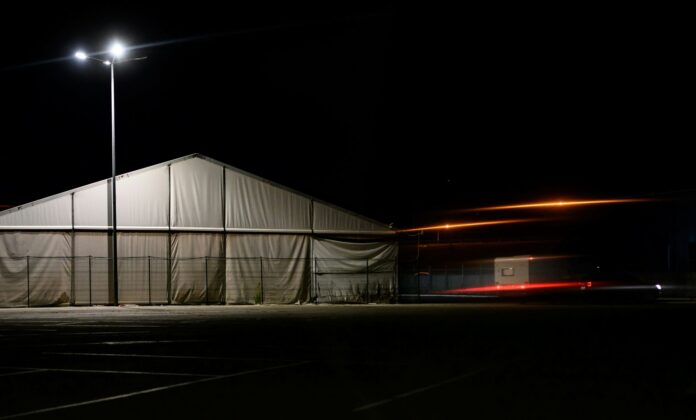
This is where a commercial fabric building becomes a compelling solution. Built with robust steel frames and tensioned fabric membranes, it offers wide, column-free interiors that maximize usable space. Compared to brick-and-mortar structures, it can be installed rapidly, relocated if necessary, and customized with lighting, ventilation, and insulation features. It’s lighter on foundations, adaptable to changing operational needs, and often more economical, especially when timelines are tight.
With modular building solutions, much of the work happens simultaneously. Prefabricated modular units are manufactured through off-site fabrication while your site is being prepared. By the time foundations are ready, your transport-ready modules can be delivered and installed.
This parallel process shortens overall timelines and gives you scalability. Need to expand operations mid-project? You can add more modular structures without redesigning the entire site. That flexibility is critical when market demand shifts unexpectedly.
Precision Engineering and Waste Reduction
In large-scale energy and infrastructure projects, even small inefficiencies add up. Excess materials, rework, and on-site errors increase both cost and environmental impact.
Factory-controlled production minimizes these risks. Components built with durable steel frames are assembled using precise measurements and advanced insulation techniques. As a result, material waste drops significantly compared to conventional builds.
Because modules are produced under consistent quality controls, you maintain compliance with strict safety and quality requirements. This consistency is particularly valuable when you’re operating across multiple regions with varying regulatory standards.
Energy Efficiency and Integrated Systems
Energy performance is no longer a secondary consideration. It’s central to your design strategy. Rapid deployment systems allow you to integrate energy-efficient insulation, high-performance glazing, and even solar panels from the start.
With a thoughtful modular design, every floor plan can be tailored to support operational efficiency. In energy facilities, that might mean control rooms or mobile offices positioned strategically for workflow optimization. For technology-driven projects, modular data centers can be pre-equipped with advanced IT systems before they ever reach the site.
Utility connections are often pre-installed during manufacturing, simplifying on-site hookups and reducing installation time. This level of integration ensures that when your building arrives, it’s not just a shell but a nearly operational structure.
Expanding Commercial and Industrial Capacity
Rapid deployment solutions also play a vital role in scaling commercial and industrial operations. When you need warehouse expansion, additional equipment storage, or flexible production space, permanent construction may not be practical in the short term.
Here, speed and adaptability define your success. Modular structures can be installed quickly and reconfigured as needs evolve. If your business is testing new markets, retail pop-ups and temporary event spaces allow you to experiment without committing to long-term leases. In hospitality projects, temporary expansions can enhance guest experiences during peak seasons without interrupting core operations.
Facilitating Disaster Response and Recovery
Beyond mainstream construction and energy use, rapid deployment systems prove indispensable during crises. When natural disasters strike, immediate infrastructure is critical. Communities affected by events like the 2024 California wildfires needed fast access to safe shelter, medical care, and coordination hubs.
In these moments, temporary housing and modular disaster relief housing become lifelines. To provide secure environments for relief workers and displaced families alike, you can deploy emergency temporary buildings that support disaster response protocols.
Because these are relocatable buildings, they can be moved or reconfigured as recovery progresses. During disaster recovery, you might install field hospitals, logistics centers, or administrative hubs within days rather than months. Importantly, these temporary modular buildings are engineered to comply with building codes, ensuring safety even under challenging conditions.
Supporting Military and Security Operations
Rapid deployment infrastructure also underpins modern defense operations. Flexibility is everything in high-risk or evolving environments. During military operations, forces require secure, adaptable spaces that can be transported and installed quickly.
This is where modular military units and containerized military solutions excel. These transport-ready modules are built to defense-grade specifications, ensuring durability in extreme climates and operational settings. At forward operating bases, they may serve as command centers, living quarters, storage areas, or field hospitals.
Many units are designed according to their purpose, for instance, as military kitchen units, communications hubs, or medical facilities. This purpose-driven approach ensures efficiency while maintaining mobility.
Security features are often critical. Some structures include ballistic protection options and blast protection systems, particularly when used as a guard post or secure checkpoint. Beyond military contexts, similar systems support law enforcement operations that require durable, relocatable infrastructure.
Because these solutions are modular, they can be dismantled, transported, and reassembled as mission objectives shift. You maintain operational agility without investing in permanent structures that may outlive their usefulness.
A Smarter Way to Build for an Unpredictable World
Across construction, energy, defense, and disaster relief, the message is consistent: agility wins. Rapid deployment building strategies give you control, whether you’re expanding industrial capacity, improving sustainability, supporting workforce housing, or responding to emergencies.
Through intelligent modular design and advanced manufacturing processes, you reduce delays, control costs, and meet evolving safety and quality requirements. From commercial expansion to crisis response, these systems allow you to act decisively.
In a world defined by growth, disruption, and constant change, building faster isn’t just a convenience. It’s a competitive advantage.