
Port operations are inherently volatile, especially as major hubs have recently seen berth time increases of up to 61.5%. This pressure creates a vacuum where haste replaces protocol.
By fostering a culture where a cargo handler can halt a process without fear of reprisal, ports effectively decentralize their risk management. It is about moving from a top-down command structure to a collaborative safety ecosystem.
Frontline engagement is the single most effective barrier against operational errors in port logistics because it transforms passive laborers into active safety stakeholders. When crane operators and yard crews feel heard, they catch the small anomalies that data sensors often miss. This connection between management and the floor ensures that safety protocols are not just documents in a binder but lived practices during high-pressure shifts.
Structured Briefings And The Feedback Loop
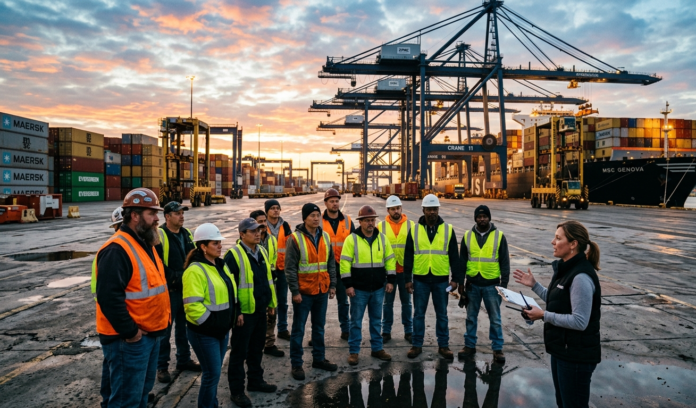
The morning briefing is often the most undervalued tool in a terminal manager’s arsenal. Effective engagement starts with structured, two-way communication that moves beyond a simple task list. Supervisors who use these sessions to solicit specific feedback on equipment performance or yard congestion see a marked decrease in “avoidable” incidents.
There are 748 maritime injuries recorded every year in the EU alone. For a port worker, these are not just numbers, they represent colleagues and personal safety risks that direct engagement could have mitigated.
High worker burnout and low engagement are now scientifically linked to reduced safety compliance. When workers are exhausted and ignored, they stop following the subtle rules that prevent catastrophic machine failure.
Operational excellence is often recognized through formal appreciation programs that validate the difficult nature of frontline work. An award crystal from the Fine Awards playbook serves as a physical touchstone for teams that hit safety milestones or maintain zero-error streaks, for example. Recognition bridges the gap between the corporate office and the gantry crane, proving that management values precision as much as speed.
Real World Impact Of Supervisor Visibility
A supervisor who remains in a glass office is blind to the emerging risks on the dock. Floor visibility is the “quiet” engagement that builds trust over time. It allows for real-time coaching and the immediate identification of bottlenecks before they lead to a fatigue-driven error.
The modern maritime industry is shifting toward a “Journey to Zero Harm” mentality. This requires more than just better tech; it requires seafarer well-being and structured training to remain the backbone of the global economy. To maintain this standard, port leaders must integrate several key engagement strategies:
- Structured pre-shift briefings that include worker-led risk assessments
- Anonymous reporting channels for near-miss incidents without fear of discipline
- Regular floor walks by senior leadership to validate frontline challenges
Consistent presence helps humanize the hierarchy. When a yard crew sees a manager take an interest in the specific mechanical quirks of a reach stacker, they are more likely to report the next minor hydraulic leak. This proactive reporting is the difference between a five-minute seal replacement and a four-hour environmental cleanup.
Data Driven Engagement
Technology should empower the frontline, not just monitor them. Systems that provide crews with real-time data on their performance enable self-correction.
Ensure that all engagement protocols, including management techniques, meet the necessary quality standards for operational reporting. Using a standardized framework ensures that feedback is objective and actionable rather than anecdotal.
Human behavior remains the primary cause of over 75% of maritime incidents. Addressing this is not a matter of more rules, but better engagement. When workers feel they have “Stop Work Authority,” they act as the final, most intelligent safety sensor in the entire logistics chain.
Building A Resilient Safety Culture In Port Logistics
Engagement is not a one-time initiative but a continuous investment in human capital. By prioritizing the voices of those moving the containers, ports build a layer of resilience that no software can replicate.
This cultural shift ensures that safety and efficiency exist in a symbiotic relationship rather than a constant tug-of-war. For more insights on improving terminal efficiency and worker retention, our site has plenty more coverage of modern maritime leadership topics.