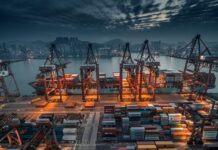
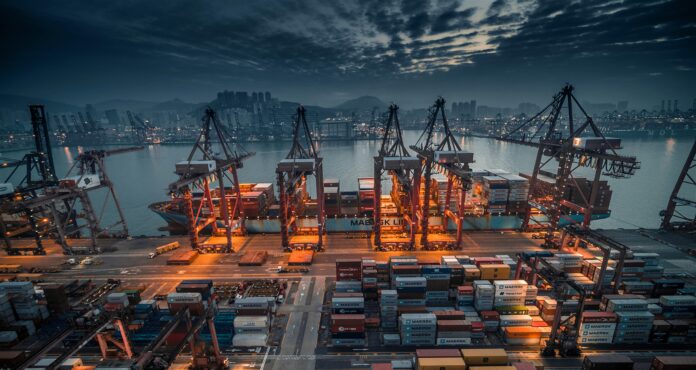
In container terminals, a single re-handle is often dismissed as a minor operational adjustment – an unavoidable part of daily operations. Yet across an entire terminal, these “small” moves accumulate into a significant, often invisible cost. The real issue is not the re-handle itself. It is the operating model that makes re-handling inevitable.
Today, many terminals are not truly executing plans, they are managing exceptions. What began as occasional intervention has evolved into a structural dependency. Exception handling has become the norm, and re-handling is one of its clearest symptoms.
Planning Under Structural Constraints
Terminal planning operates under constant pressure. Decisions must be made quickly, often with incomplete or outdated information. Vessel arrival times shift, yard conditions evolve, and equipment availability fluctuates. These are not failures of people or process – they are structural constraints of the operating environment.
As a result, planning is forced to rely on assumptions, averages, and static snapshots of a highly dynamic system. The plan may be directionally correct, but it lacks the precision required for flawless execution.
When Execution Diverges
The moment execution begins, reality diverges from the plan. Containers are not in expected positions. Yard congestion emerges. Equipment is reassigned. Vessel schedules shift again. Each deviation may seem minor, but collectively they disrupt flow and force corrective action.
This is where re-handling begins.
A container moved once becomes a container moved twice. A sequence breaks, and additional moves are required to restore order. These interventions are necessary, but they are also symptomatic.
From Exception to Embedded Practice
To bridge the gap between plan and reality, terminals rely on exception handling. Operators intervene in real time, making adjustments to keep operations moving. Over time, however, this reactive approach becomes institutionalized.
Re-handling is no longer treated as an exception -it is expected. Supervisors anticipate it. Systems accommodate it. Performance metrics quietly absorb it. What was once a disruption becomes part of the workflow. But this normalization comes at a cost.
The Hidden Cost of One Extra Move
One extra re-handle rarely stays isolated. It triggers a chain reaction across the terminal:
- Rising costs: Additional moves increase fuel consumption, equipment wear, and labor hours
- Reduced productivity: Valuable capacity is consumed by non-productive work
- Operational instability: Each adjustment introduces further variability into an already dynamic system
At scale, these inefficiencies compound. A terminal may still meet throughput targets, but at higher cost, lower predictability, and greater strain on both assets and workforce.
The Limits of Reactive Operations
The traditional model – plan, execute, react 0 has sustained the industry for decades. But it masks a deeper issue: continuous correction is not control. Reactive operations compensate for uncertainty; they do not eliminate it.
As volumes grow and supply chains become more interconnected, this model becomes increasingly fragile. The industry is reaching a point where absorbing inefficiency is no longer viable.
A Shift Toward Predictive Precision
Leading terminals are now transitioning toward a super-intelligent operating model – one that reduces uncertainty before execution rather than managing its consequences afterward. At the core of this shift is real-time, high-fidelity visibility.
Solutions such as RBS’s TOPX-Intelligent-3D create a live, 3D digital twin of terminal operations. Yard conditions, container positions, and equipment status are no longer approximated, instead they are seen with precision.
Building on this foundation, TOPX-Expert (TOS) with advanced automatic vessel planning aligns operational plans with actual conditions. Instead of relying on static assumptions, planning becomes dynamic, continuously validated, and synchronized across quay, yard, and landside.
From Reaction to Prevention
This new model fundamentally changes how terminals operate:
- From reacting to problems → to predicting and preventing them
- From fragmented visibility → to a unified, real-time operational picture
- From accepting re-handles → to minimizing them at the source
By simulating near-future scenarios and identifying conflicts before they materialize, terminals can reduce unnecessary moves, stabilize execution, and improve overall flow.
Designing Out Inefficiency
Reducing re-handles is not about working harder – it is about designing operations that do not require them. When planning is aligned with reality, and execution is guided by continuous insight, the need for constant intervention diminishes. Exception handling returns to its intended role: a safeguard, not a system. For transport ministries, port authorities, and terminal operators, this transition is critical. Efficiency, resilience, and sustainability can no longer be achieved through reactive adjustment alone.
The cost of one extra re-handle is not just operational – it is systemic. Addressing it requires a shift to super-intelligent, digital twin–driven management. That shift is already underway, and the terminals that lead it will define the next standard of global port performance.
Author: Valerie Nguyen