

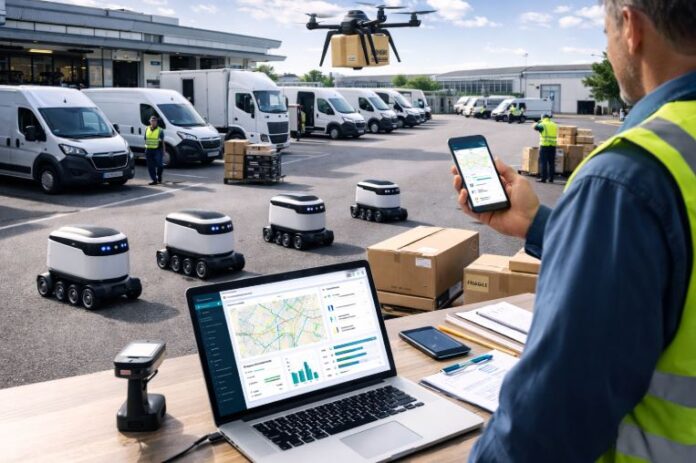
For large companies, delivery is no longer just an operational function—it’s a core part of the customer experience and a major driver of cost, efficiency, and brand reputation. Whether a business is delivering physical goods, industrial equipment, retail products, or B2B supplies, the delivery process is complex, multi-layered, and increasingly technology-driven.
Understanding the full delivery lifecycle helps large organisations identify inefficiencies, reduce costs, and improve reliability. This article breaks down the entire delivery process for large companies, from initial planning through to last-mile execution, highlighting where strategy, systems, and people all play a role.
Delivery as a Strategic Function, Not Just Logistics
In large organisations, delivery touches almost every department. Sales promises delivery timelines, procurement secures materials, operations prepare goods, finance tracks costs, and customer service manages expectations. Because of this, delivery is as much a strategic function as it is a logistical one.
Poor delivery performance can erode trust, increase returns, and damage long-term customer relationships. Conversely, reliable and transparent delivery can become a competitive advantage, especially in markets where products themselves are similar.
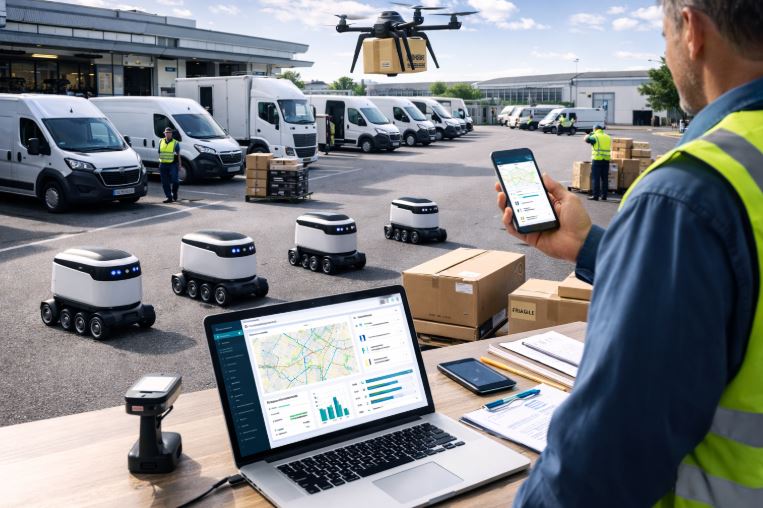
Demand Forecasting and Order Planning
The delivery process begins long before a package is shipped. Accurate demand forecasting allows companies to anticipate volume, plan capacity, and allocate resources efficiently. Large companies typically use historical data, seasonal trends, and predictive analytics to estimate demand.
Order planning converts that forecast into actionable schedules. This stage determines how many deliveries will occur, where they will go, and when they must arrive. Poor planning at this stage often leads to downstream bottlenecks, rushed shipping, or excess costs.
Inventory Management and Fulfilment Preparation
Inventory management is closely tied to delivery efficiency. Large companies often operate multiple warehouses or distribution centres, each serving different regions or customer segments.
At this stage, decisions are made about:
- Where inventory should be stored
- Which warehouse will fulfil which orders
- How goods should be picked, packed, and staged
Efficient fulfilment preparation reduces errors, shortens handling time, and ensures goods are ready to move without delay.
Warehouse Operations and Dispatch
Once orders are ready, warehouse operations take centre stage. This includes picking items, packing them appropriately, labelling, and preparing documentation.
For large companies, automation plays a significant role here. Conveyor systems, barcode scanning, and warehouse management systems (WMS) help maintain speed and accuracy at scale.
Dispatch scheduling follows, determining when goods leave the warehouse and how they are loaded for transport. Proper sequencing ensures vehicles are utilised efficiently and delivery routes make sense.
Transportation and Line-Haul Logistics
Transportation is often one of the largest cost components in the delivery process. For large companies, this stage may involve a mix of owned fleets, third-party carriers, and long-haul transport providers.
Line-haul logistics focuses on moving goods between hubs—such as from manufacturing sites to regional distribution centres or from warehouses to local depots. Optimising routes, consolidating loads, and managing carrier relationships are key to controlling costs and meeting delivery timelines.
Visibility at this stage is critical. Delays or disruptions here can cascade into missed delivery windows later in the process.
Tracking, Visibility, and Communication
Modern delivery expectations demand transparency. Large companies must provide internal teams and customers with real-time or near-real-time visibility into delivery status.
Tracking systems integrate data from vehicles, carriers, and warehouses to provide updates on location, estimated arrival times, and potential delays. This information supports proactive communication rather than reactive problem-solving.
When customers know what’s happening, even delays are easier to manage.
Last-Mile Delivery: Where Complexity Peaks
The last mile—the final leg of delivery from a local hub to the customer—is often the most complex and expensive part of the process. It involves navigating urban congestion, residential access issues, time windows, and customer availability.
For large companies delivering at scale, last-mile inefficiency can quickly erode margins. Missed deliveries, failed attempts, and manual coordination add cost and frustration.
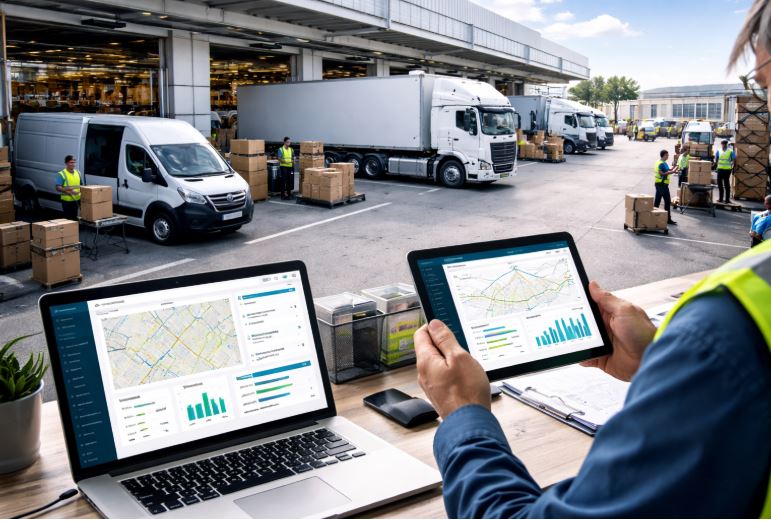
This is why many organisations invest in a delivery management platform designed specifically for last-mile delivery. These platforms optimize routes, assign drivers dynamically, track deliveries in real time, and provide proof of delivery. By centralising last-mile operations, companies gain control, visibility, and scalability at the point where customer experience is most visible.
Technology’s Role Across the Delivery Lifecycle
Technology underpins every stage of modern delivery. Large companies rely on integrated systems to connect planning, execution, and reporting.
Key systems typically include:
- Enterprise Resource Planning (ERP)
- Warehouse Management Systems (WMS)
- Transportation Management Systems (TMS)
- Delivery management and tracking platforms
The challenge is not just adopting technology, but ensuring systems communicate effectively and data flows smoothly across departments.
Managing Exceptions and Disruptions
No delivery process runs perfectly. Weather events, traffic, labour shortages, equipment failures, and customer-related issues can all disrupt plans.
Large companies must design delivery processes that anticipate exceptions and respond quickly. This includes escalation protocols, contingency routing, and empowered frontline teams who can make decisions in real time.
Effective exception management minimises knock-on effects and protects service levels.
The Human Element in Large-Scale Delivery
Even with advanced automation, people remain central to delivery operations. Drivers, warehouse staff, planners, customer service agents, and managers all contribute to success.
Training, communication, and alignment are essential. Employees need clear processes, reliable tools, and authority to resolve issues when they arise. High-performing delivery organisations treat people as enablers of efficiency, not just cost centres.
Performance Measurement and Continuous Improvement
Large companies rely heavily on metrics to evaluate delivery performance. Common measures include on-time delivery rates, cost per delivery, failed delivery percentages, and customer satisfaction scores.
However, metrics are only valuable if they drive action. Regular review of delivery data helps organisations identify trends, test improvements, and refine processes over time.
Continuous improvement is especially important in delivery, where small gains at scale can produce significant financial impact.
Sustainability and Environmental Considerations
Delivery operations also have environmental implications. Large companies face growing pressure—from regulators, customers, and investors—to reduce emissions and improve sustainability.
This influences vehicle choice, route optimisation, packaging decisions, and delivery frequency. Electric vehicles, consolidated deliveries, and smarter routing are increasingly part of delivery strategy.
Balancing sustainability goals with cost and service requirements is now a standard challenge for large organisations.
Coordination Across Departments
One of the biggest challenges in the delivery process is coordination. Delivery sits at the intersection of multiple departments, each with its own priorities.
Successful large companies align incentives and communication so that sales promises are achievable, operations are prepared, and delivery teams are supported. This alignment reduces internal friction and improves overall performance.
Scaling Delivery Operations
As companies grow, delivery complexity increases. New markets, higher order volumes, and expanded product ranges place pressure on existing systems.
Scalability depends on process standardisation, technology flexibility, and data-driven decision-making. Organisations that plan for scale early are better positioned to grow without service degradation.
Common Pitfalls in Large-Company Delivery
Despite resources and scale, large companies often face recurring delivery challenges:
- Over-reliance on manual processes
- Poor system integration
- Limited last-mile visibility
- Inflexible routing and scheduling
- Reactive rather than proactive communication
Addressing these issues requires a holistic view of the delivery process rather than isolated fixes.
Marketing Delivery Capabilities as a Competitive Advantage
For large companies, marketing is increasingly tied to delivery performance. Customers don’t just buy products—they buy reliability, speed, and transparency. How a company communicates its delivery capabilities can significantly influence purchasing decisions, particularly in competitive markets where similar products are widely available.
Effective marketing for delivery-focused organisations highlights certainty rather than promises. Clear messaging around delivery timeframes, tracking visibility, and reliability builds trust and reduces friction at the point of sale. Many large companies now integrate delivery messaging directly into product pages, checkout experiences, and customer communications, making logistics part of the brand story rather than a background function.
Behind the scenes, data from delivery management platforms plays a key role in shaping this messaging. Real performance metrics—such as on-time delivery rates or average delivery windows—allow marketing teams to make credible, evidence-based claims. When marketing aligns closely with actual delivery operations, companies avoid overpromising and instead position their logistics capability as a genuine competitive advantage.
Key Components of an Effective Delivery Process
Large companies with strong delivery performance typically focus on:
- Accurate demand planning
- Integrated technology systems
- Clear ownership across stages
- Strong last-mile execution
- Continuous performance monitoring
These elements work together to create reliability at scale.
Final Thoughts: Delivery as a Competitive Advantage
For large companies and businesses delivery is no longer just about getting goods from point A to point B. It’s about orchestration—aligning people, processes, and technology across a complex network to deliver consistently and efficiently.
By understanding the full delivery process, investing in tools like delivery management platforms for last-mile execution, and continuously refining operations, large organisations can transform delivery from a cost burden into a strategic advantage.
In an environment where customer expectations continue to rise, mastering delivery is not optional—it’s essential for long-term success.