

Figure 1 shows the distinct cluster of port-pairs that Gemini stands to absorb. Currently, Gemini operates 32 unique region-region pairs on the Transpacific, representing 70 unique port-pair combinations. The integration of ZIM’s network would increase this to 41 unique region-region pairs and 84 unique port-pair combinations. This constitutes a 28% increase in origin-destination region combinations available to the alliance.
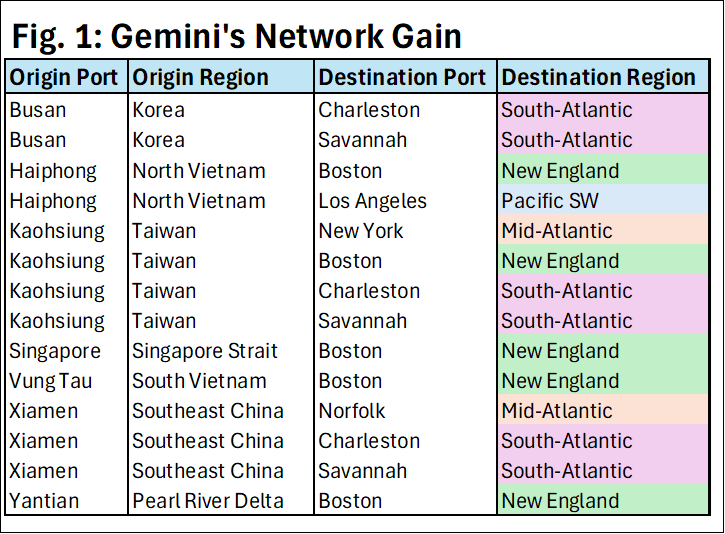
Crucially, this expansion is not merely redundant overlap. The acquisition secures Gemini exclusive direct access to the New England destination region (Boston), which is entirely absent from the current Gemini network. Furthermore, it adds robust, direct connectivity into key South-Atlantic gateways, such as Charleston and Savannah, from five major Asian origins, including North and South Vietnam, the Singapore Strait, and Taiwan.
However, absorbing this market reach presents a distinct operational challenge. Gemini Cooperation’s network is heavily anchored by a hub-and-spoke model designed to achieve a 90% schedule reliability target, by minimizing direct mainline port calls. Routing time‑sensitive, legacy ZIM e-commerce cargo through these transshipment hubs risks diluting the fast transit times those customers value. To successfully integrate this newly acquired market reach, without compromising core reliability targets, Gemini will likely need to deploy a new, specialized East Coast service, potentially to New England, rather than simply adding calls to existing hub-and-spoke service loops.