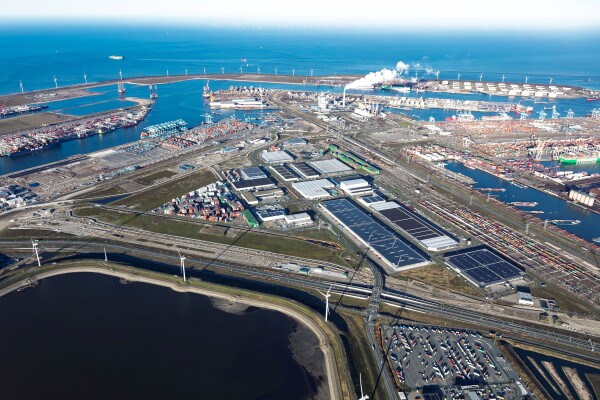
The Port of Rotterdam reported cargo throughput of 428.4 million tonnes in 2025. The figure declined 1.7% from the previous year.
Dry bulk showed the largest decline at 6.5%. Liquid bulk fell 1.5%. Container throughput grew 3.1% in TEU to reach 14.2 million TEU. Tonnage declined 0.2%. Signs of recovery appeared in all segments during the second half.
CEO Boudewijn Siemons said chemical and logistics companies faced considerable pressure. European industry suffered from increasing global competition amid escalating geopolitical tensions.
Several chemical companies announced plans to close Rotterdam factories. Investments in new and ongoing renewable fuel projects were halted. Concerns about lagging industrial investment remain high.
Iron ore and scrap throughput decreased 11.5%. The European steel industry’s competitive position remains under pressure from high energy and CO₂ prices and cheap imports. Coal throughput fell 8.7% to 17.3 million tonnes.
Crude oil throughput increased 3.4% to 101.2 million tonnes. Refining margins in Northwest Europe increased during the year. Mineral oil products decreased 12.6%. LNG throughput rose 15.1% to 13.0 million tonnes as European gas reserves needed replenishment.
Container import volumes from Asia increased 9.3%. Throughput to North America grew 13.6%. Congestion at container quays diverted significant volume to other ports. This segment showed a 15.9% decrease in TEU.
The Port Authority’s revenues rose 6.6% to EUR 940.4 million. EBITDA increased 3.6% to EUR 583.6 million. Net profit fell to EUR 266.0 million due to higher depreciation and a EUR 13 million impairment charge. The Port Authority invested EUR 291.4 million.
Construction of major sustainability projects progressed. Air Liquide commenced building a 200 MW green hydrogen plant for operation by end-2027. The Porthos CCS project nears completion with the offshore pipeline installed. The 32-kilometre hydrogen pipeline has been welded together.
The Port Authority and Rotterdam Municipality published Port Vision 2050 aiming for the most competitive, sustainable and resilient port in Europe.
Government measures taken in 2025 are positive but insufficient to level the playing field with Europe. Major bottlenecks remain including nitrogen issues, grid congestion, and high energy costs compared to neighboring countries.