

Cost pressure dominates industry sentiment
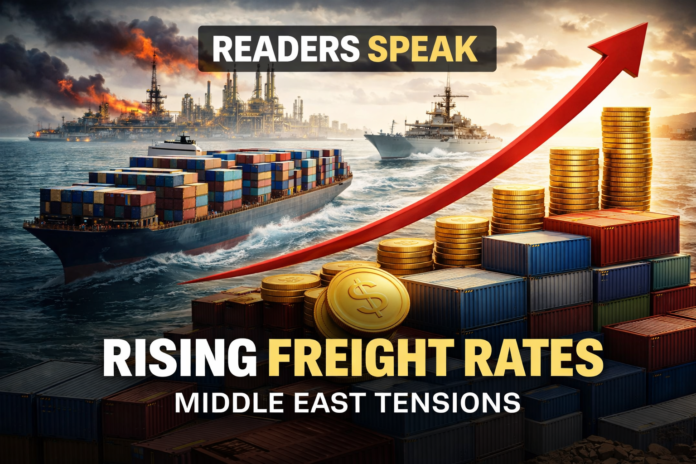
Rising tensions across key Middle East maritime corridors continue to shape expectations in container shipping. In the latest Readers Speak poll, industry participants were asked to identify the most significant impact on operations.
The response was clear. Higher freight rates stand out as the primary consequence of ongoing instability. This reflects the growing cost burden linked to rerouting, security measures, and operational uncertainty across routes connected to the Strait of Hormuz and the Red Sea.
Network instability remains a key concern
Beyond cost increases, many respondents highlighted network instability as a major issue. Frequent route adjustments, service changes, and shifting schedules are making network planning more complex. Carriers must continuously adapt to evolving risk conditions, often with limited visibility. This reinforces the view that current disruptions are not isolated events, but part of a broader pattern affecting global shipping networks.
Reliability and transit times play a secondary role
While still relevant, fewer respondents pointed to service reliability and longer transit times as the primary impact. Instead, the industry increasingly views them as consequences of deeper structural pressures, particularly rising costs and network disruption. In many cases, carriers already absorb longer transit times as part of rerouting strategies, especially via the Cape of Good Hope.
Readers Speak: Cape routing emerges as the safe bet for carriers
A market adjusting to prolonged disruption
The results highlight a clear shift in industry thinking. Rather than focusing only on immediate operational challenges, readers increasingly prioritize economic impact and structural instability.
Conclusion
The message from readers is direct: freight rates are now the most visible and immediate impact of Middle East tensions.
As long as instability continues across key corridors, analysts expect cost pressure to remain a defining feature of the container shipping market.