
When we hear the word “railway,” most of us picture old steam locomotives, thick smoke, and that iconic whistle echoing through the hills. A bit of retro romance from the 19th century. But today’s railways are a whole different story. What’s happening in rail technology right now isn’t just evolution — it’s a revolution. This new wave of rail transportation technology is redefining how we move people and goods across entire continents.
Instead of steel and steam, we’ve got data, sensors, and smart algorithms. Trains, stations, and tracks are all connected. Computers predict failures before they happen, and analytics help keep everything running faster, safer, and more efficiently. Sounds like science fiction? Maybe — but it’s happening right now.
And it’s not just about trains arriving on time. It’s about building smarter, greener, more reliable transportation systems that save time, money, and energy while making travel smoother for everyone. Data has become the new fuel for the modern railway.
So if you’re curious about the future of travel — take a closer look. That future is already racing down the tracks.
From Steam Locomotives to Smart Rails
Railway infrastructure has always been complicated stuff. It’s not just the tracks. There’s a whole network of rails, countless switches, overhead lines for power, signaling systems. By any measure, it’s expensive to maintain. Traditionally, railway operators followed a simple pattern: inspections on schedule, planned maintenance, and hoping nothing broke between checkups.
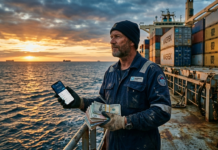
Then came IoT sensors. Tiny devices you can stick almost anywhere, on the tracks and even on locomotive brakes. They send a constant stream of data: vibration, temperature, noise, even images from cameras. Such advances show how rail transport technology has become inseparable from data science and IoT innovation. Suddenly, railways had massive amounts of information about the real condition of their infrastructure.
Honestly, it looked like a problem at first. What do you do with petabytes of data? How do you make sense of it? But that’s when artificial intelligence and analytics stepped in. The concept was straightforward: instead of waiting for a component to fail, you predict it’s going to fail. This is called predictive maintenance, and it changes everything.
Machine learning algorithms analyze sensor behavior, spot patterns that signal an incoming failure. Operators get a recommendation: “The third wheelset on locomotive number 47 will wear out in about twenty days. Replace it tomorrow, say at three in the morning.” The result is simple: fewer unexpected breakdowns, fewer delays, lower costs.
AI-Powered Operations: Predict, Prevent, Improve
Let’s say there’s a problem on one section of the line. Say the braking system fails on some train. Traditionally, that train waits. Every train behind it waits. When they finally move, they’re trying to make up for lost time, which creates congestion somewhere else. Within a few hours, a cascading delay spreads across the first few hundred kilometers of the network. It’s a disaster for passengers and a logistics nightmare.
Large European operators like Deutsche Bahn and SNCF figured out long ago that this wasn’t acceptable. They started applying predictive analytics not just to equipment, but to the whole system. These systems analyze historical data about all delays: weather conditions, technical issues, staff shortages, peak hour crossing times at stations. The result? Models that assess delay probability and scale in real time.
When a problem happens, dispatchers don’t just get an alert. They get a recommendation: “Route this train to an alternate track at station X. Move a locomotive from station Y over there. Reschedule the crews like this.” This keeps a local problem from spreading into a national collapse. The results are obvious: punctuality went up, cargo delivery became more reliable.
Big IT companies offer comprehensive transportation technology solutions. In fact, the most advanced rail transportation technology platforms now merge AI with predictive analytics to make entire networks self-optimizing. Everything works in real time with active AI involvement.
On top of that, computer vision cuts inspection time way down. Alstom, for example, deployed systems using drones and cameras to monitor track condition. AI automatically spots anomalies: microcracks, corrosion, warping. In seconds instead of days.
IoT on the Tracks: Sensors, Data Streams, Smart Infrastructure
The number of sensors on modern railways is growing exponentially. Pressure sensors on brake cylinders, temperature sensors on bearings, density sensors on contact lines, cameras monitoring track surface condition. A train travels through Europe, leaving a trail of digital data behind it.
This sounds great in theory. In practice, you hit the usual Big Data problem: quality. Data often comes from older systems. It has gaps. It’s “noisy,” meaning it contains errors and inaccuracies. A sensor gives a false reading because of a defect that happened three weeks ago. The algorithm doesn’t know that and spits out a wrong recommendation. Result? Unnecessary work, expensive repairs, wasted materials.
On the flip side, if the data isn’t good enough, algorithms can miss a real defect. That’s worse than just annoying. That’s dangerous.
So data infrastructure needs to be solid. Data has to be collected, cleaned, validated with careful precision. Today, solutions like Thales TIRIS or Siemens Mobility Smart Infrastructure do this right. They combine data from sensors on tracks and trains, refine it, feed it into one management system. These ecosystems are a core part of modern rail transport technology, where digital twins, AI, and IoT create one continuous feedback loop.
Travel data analytics now includes digital twins, one of the big trends in this field. Think of it this way: inside a computer exists an exact copy of a locomotive, a station, even an entire section of line. You can test anything you want there. Change the schedule, add a train, redistribute cargo. Everything gets simulated with zero risk to actual operations. Platforms like ABB Ability or Bentley iTwin do this today.
Sustainability Without Losing Speed
The climate is changing, emissions are under pressure, and the public expects transport to be eco-friendly. Railways heard that signal.
Recently, companies have been investing in green technology. Alstom’s Coradia iLint hydrogen fuel cell train already runs in Germany and Italy. This isn’t a prototype, these are real working trains carrying real passengers. No diesel, no traditional grid electricity, just hydrogen. Emissions? Only water vapor.
For areas where hydrogen infrastructure doesn’t exist yet, hybrid solutions are being developed. Stadler Flirt H2 and Hitachi Masaccio let you run on batteries or diesel depending on conditions. It’s a bridge to full electrification.
Energy efficiency is just as important. You can minimize what a train uses through smart speed management. Siemens Trainguard MT automatically adjusts acceleration and braking based on route profile. Instead of full throttle and hard braking like drivers used to do manually, the algorithm constantly finds the smoothest motion profile. It saves fuel and cuts brake wear. Multiply fewer brake replacements across thousands of locomotives and you get huge savings.
Modern rail transport technology is moving toward zero emissions without sacrificing speed — a clear sign that sustainability and innovation can coexist.
Passenger Experience 2.0
Buying a train ticket used to be straightforward. You went to the ticket window, asked for a ticket to your destination, paid in cash. Everything’s different now.
Contactless smart tickets, mobile registration, multilingual apps, route recommendations based on your preferences. Platforms like Amadeus Rail and S3 Passenger from Siemens combine schedules, payment systems, and demand analytics on one screen. You buy a ticket in the app, the system instantly knows you need an overnight berth, and recommends a sleeping car. The system sees you have a child and offers seats near the restroom.
Real-time travel recommendations come through 5G and IoT platforms. Travel data analytics in the travel industry now means if there’s a delay, you find out first and get an alternative right away. This transforms the travel experience from boring waiting in uncertainty into active participation in your own journey.
Cybersecurity on the Rails
As railways go digital, a new problem emerges: vulnerability to cyber attacks. In 2022, European transport hubs became targets for coordinated attacks. Attackers broke into traffic management systems, created congestion, compromised passenger data.
This showed that rail infrastructure needs industrial-grade cybersecurity. Solutions like Thales Cybels, Kaspersky Transportation Security, IBM QRadar use a Zero Trust architecture, which assumes every access attempt is potentially dangerous. Network segmentation ensures that if one system gets compromised, the attacker can’t automatically advance further.
Railways are also stepping up monitoring activity. AI systems analyze network traffic patterns, spotting suspicious activity in real time. If something looks off, the system alerts the human decision-maker. Result: attacks get blocked before they cause damage.
The Future of Rail Technology
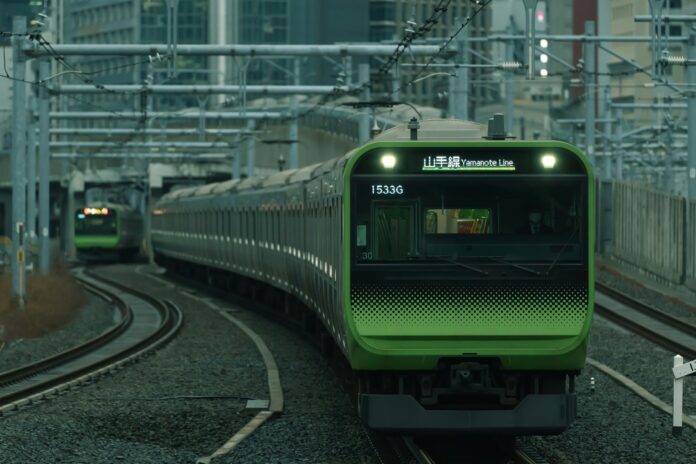
Railways in the 21st century will be autonomous. Deutsche Bahn is developing SmartTrain, a completely self-driving train with no conductor. JR East in Japan is testing AI systems that not only run the train, they even teach traditional conductors the best operating techniques. Once 5G coverage becomes available along the tracks, this becomes reality.
Railways will integrate organically into smart cities. You plan your route in the morning using an app on your phone, it syncs with the city’s train management system, which instantly redistributes resources to get you there on time. Transport infrastructure becomes part of one unified city system, like a nervous system in an organism.
Railways are evolving. It’s a blend of three things: resilience to climate change, the power of artificial intelligence, and security in a world where everything connects to the internet. In short, rail transportation technology is shaping a smarter, safer, and more sustainable future for global mobility. That’s more interesting than any 19th-century steam locomotive.