
The Port of Klaipėda handled nearly 36 million tonnes of cargo over the first eleven months of the year, maintaining double-digit growth compared to the same period last year.
Growth was driven by containerized cargo, ro-ro freight transported by ferries, and liquefied natural gas, with Klaipėda remaining the leading port among the Baltic States.
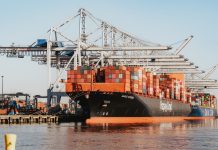
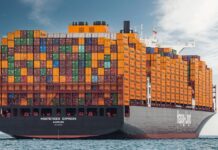
Over the first eleven months of this year, nearly 12 million tonnes of containerized cargo were handled at the Port of Klaipėda, representing a 29% increase compared to the same period last year. Containerized cargo accounts for 33% of the port’s total cargo throughput this year.
Since the beginning of the year, almost 1.2 million TEUs have been handled at the Port of Klaipėda, which is a 23% increase year-on-year.
The milestone of one million TEUs was reached earlier than ever before in the port’s history in October. Traditionally, Klaipėda would join the “millionaire ports” in December.
Another important pillar supporting the growth of cargo volumes at the Port of Klaipėda is the flow of ro-ro cargo, i.e., freight vehicles transported by ferries.
Over eleven months, this segment recorded a 7% increase, with just over 6 million tonnes handled. Containerized cargo and ro-ro freight together account for half of the port’s total cargo throughput.
The LNG cargo handling curve is also rising. In this segment, volumes increased by 17% year-on-year, reaching 2.2 million tonnes. Since the beginning of the year, 3.4 million tonnes of oil products have been handled at the Port of Klaipėda, which is a 4% improvement compared to the same period last year.
Growth trends are also evident in the minerals and construction materials category, with nearly 2 million tonnes handled, 7% more than last year. Fertilizer volumes have also increased by 3% year-on-year, reaching 1.6 million tonnes.
Over the first eleven months of this year, steady growth was also recorded in the number of arriving passengers.
Since the beginning of the year, 399,155 passengers arrived at the Port of Klaipėda by sea. Cruise ships brought 76,600 passengers. This year, the cruise passenger record set in 2017 was surpassed by nearly 2,000 tourists.
So far this year, 3.6 million tonnes of grain have been handled at the Port of Klaipėda. During the same period last year, grain volumes were 204,000 tonnes, or 5%, higher.
Volumes of scrap metal and timber have also declined this year, with decreases of 13% and 17% respectively.
The Port of Klaipėda remains the leader among the ports of the Baltic States and is currently the only port demonstrating double-digit growth.
Cargo volumes in the ports of Riga and Liepāja have declined by 7% and 2% respectively, while the Port of Ventspils recorded an 8% increase.