The Port of Gdańsk closed 2025 with a very strong cargo-handling performance, handling a total of 80.4 million tonnes of cargo, an increase of nearly 4% year-on-year, compared with 77.4 million tonnes in 2024.
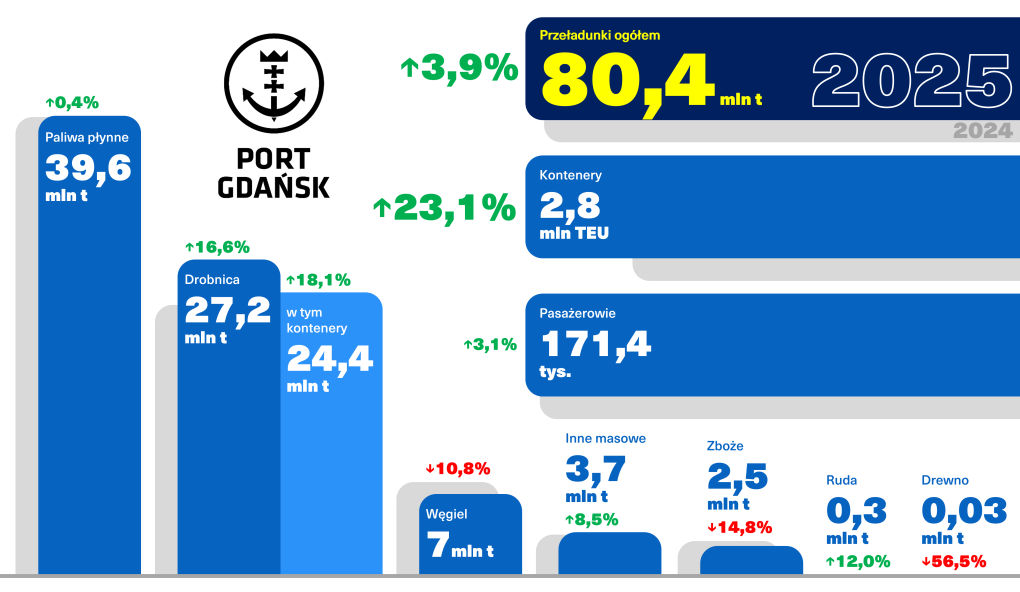
These figures clearly confirm the Port of Gdańsk’s position as the fastest-growing port in the region and a key transport hub for Central and Eastern Europe.
In 2025, a total of 4,394 vessels called at the Port of Gdańsk, up 4.2% year-on-year.
The number of commercial vessels reached 3,650, up 2.5% compared with 2024. At the same time, the average gross tonnage of commercial vessels grew by 3.8%, highlighting the Port of Gdańsk’s growing role in handling larger ships and its effective use of deep-water infrastructure.
General cargo was the second most important cargo group in 2025 and one of the fastest-growing segments. Its volume increased from 23.3 million tonnes in 2024 to 27.2 million tonnes in 2025, an increase of 16.6% year-on-year.
General cargo accounted for 33.8% of total cargo handling, confirming its growing importance for the port’s continued development.
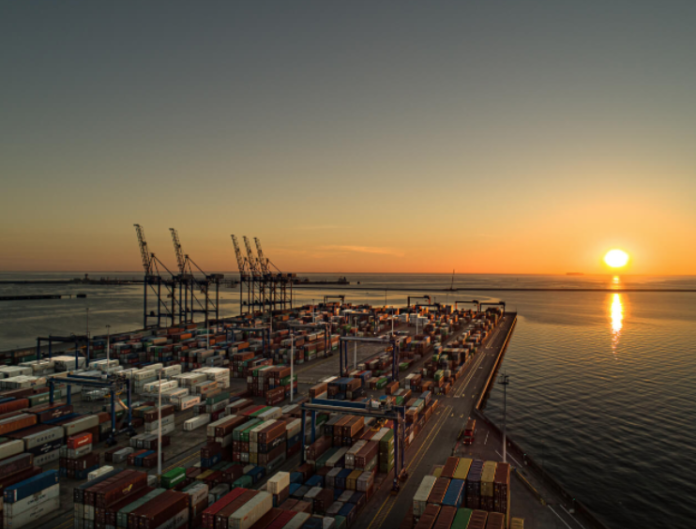
The Port of Gdańsk recorded especially strong performance in the container segment, which remains a key driver of the port’s growth.
In 2025, container terminals handled nearly 2.8 million TEU, up 23% year-on-year, including 2,766,475 TEU at the Baltic Hub Container Terminal.
At the same time, containerized cargo tonnage increased by 18%, reaching 24 million tonnes. These figures clearly confirm the dynamic development of the Port of Gdańsk and its growing role as an important link in international maritime trade.
Dorota Pyć, President of the Port of Gdańsk, stated that the Port of Gdańsk’s 2025 results confirm an ability to adapt and build resilience amid changing conditions in international maritime trade and global supply chains, while ranking among the key transport hubs in Central and Eastern Europe.
In 2025, the Port of Gdańsk recorded strong investment momentum.
Naftoport commenced the construction of its sixth liquid fuels handling berth, designed as the second facility capable of handling the largest class of oil tankers worldwide, exceeding 300 meters in length and with draughts of up to 15-17 meters.
At the same time, works continued on an offshore wind installation terminal, an FSRU, and the expansion of quays in the Inner Port.
The year also saw the completion of several investments critical to the port’s development, including the T3 terminal at Baltic Hub and the extension of Bytomskie Quay.