
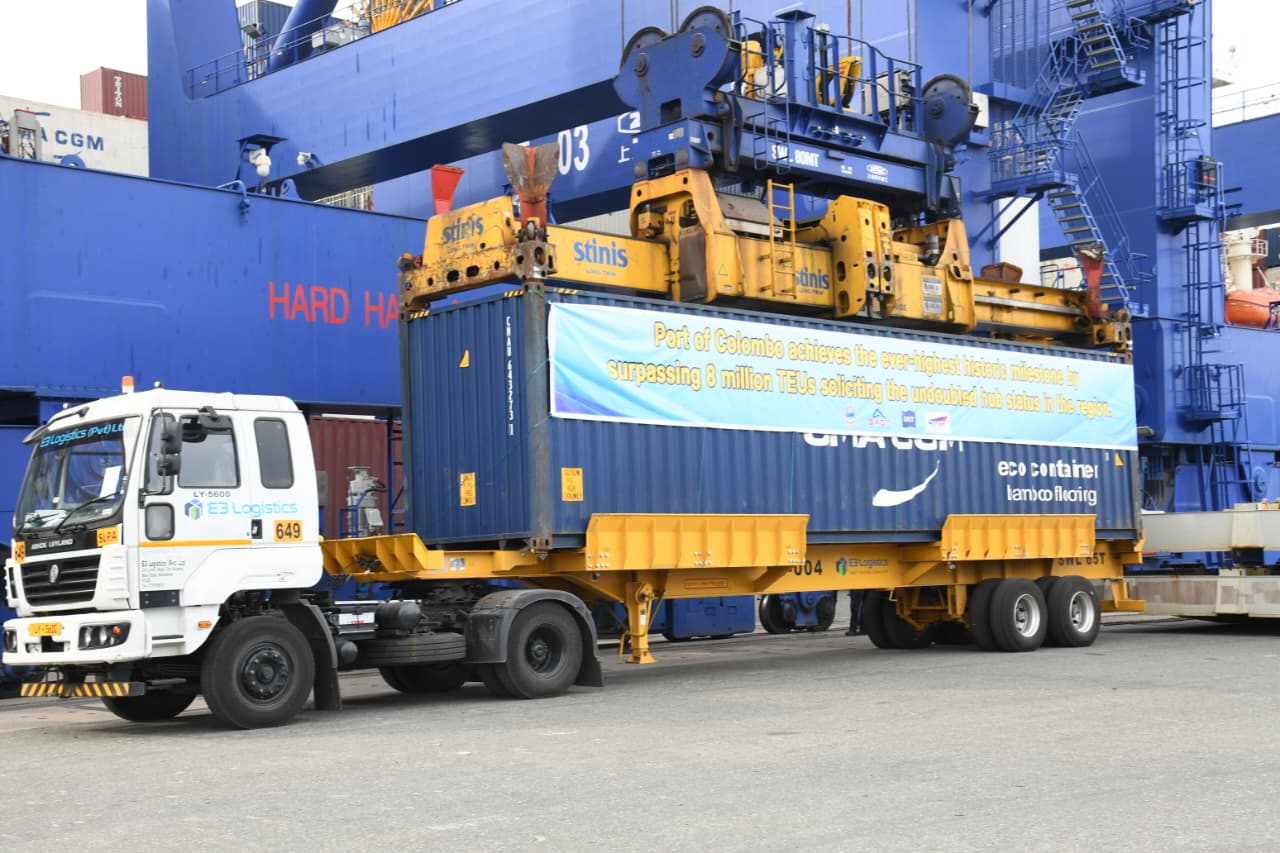
The Port of Colombo achieved a record container throughput in 2025, handling 8,291,178 TEUs, the highest volume in its history. The result follows a strong performance in 2024, when the port handled 7,792,069 TEUs, and confirms Colombo’s position as the leading container hub in South Asia.
The increase reflects steady investment, resilient operations, and continued confidence from global shipping lines. Colombo delivered this performance despite uneven global trade conditions and ongoing adjustments across international freight networks.
Terminals drive record performance
All terminals at the port contributed to the 2025 result.
Sri Lanka Ports Authority terminals provided scale and operational stability throughout the year. They supported both mainline and feeder services and handled a significant share of total volumes.
Colombo International Container Terminals (CICT) continued to serve as Colombo’s deep-water gateway for ultra-large container vessels. High berth productivity and consistent yard performance supported steady vessel flows.
South Asia Gateway Terminals (SAGT) delivered reliable handling for regional and transhipment cargo. Its performance reinforced Colombo’s role as a preferred hub in the Indian Ocean.
Progress at the Colombo West International Terminal (CWIT), led by the Adani Group with local partners, strengthened future capacity and signalled long-term commitment to the port.
Strong results in a challenging market
Global shipping networks continue to face fleet expansion, route changes, and cost pressure. Even so, Colombo attracted additional vessel calls, retained transhipment volumes, and improved vessel turnaround times.
Close coordination between terminal operators, port services, regulators, and logistics partners supported service reliability across the port. This cooperation helped Colombo maintain operational consistency throughout the year.
Built on long-term planning
Colombo’s performance reflects a long tradition of structured port development. In the late nineteenth century, the modern harbour took shape during the British colonial period. Sir John Coode designed the first permanent breakwater, transforming Colombo into a sheltered deep-water port capable of year-round operations.
That early focus on durable infrastructure continues to guide the port’s development strategy today.
Positioned for continued growth
By surpassing 8.29 million TEUs, the Port of Colombo has strengthened its role within global shipping networks. The milestone also supports Sri Lanka’s wider economic objectives.
Ongoing investment in capacity, digital systems, workforce skills, and service reliability will remain critical. The 2025 result shows that Colombo has the structure, partnerships, and operational discipline to perform at scale in a demanding global market.