Port Houston closed 2025 with its strongest performance on record. Total tonnage rose 3% year-on-year to 54.5 million short tons across its public terminals.
The growth came from a strong cargo mix. Petrochemicals, industrial cargo, manufacturing freight, and consumer imports all supported volumes.
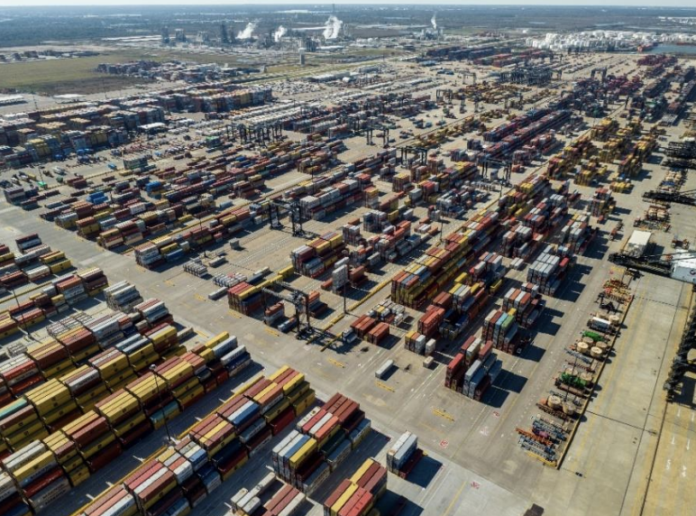
Container traffic also hit a new record. Port Houston handled 4.3 million TEUs in 2025, up 4% compared to 2024. Loaded exports increased 7%, while loaded imports rose 1%.
The port achieved record container growth despite market volatility. The result reflects sustained customer demand and ongoing infrastructure investment.
Vessel activity along the Houston Ship Channel reached 8,099 arrivals, down 4% year-on-year. Barge activity totaled 209,616 movements. Chemical tankers, bulk cargo, and general cargo increased, driven by strong demand for petrochemicals, crude oil, plastics, and machinery.
Charlie Jenkins, CEO of Port Houston, said the port delivered record results despite global uncertainty. He highlighted strong regional demand and the port’s low-cost, high-service operating environment.
Infrastructure upgrades supported the performance. Port Houston completed Wharf 7 at Bayport Container Terminal, adding 1,000 feet of berth space and more than 500,000 TEU of new capacity.
The port also added five new RTG cranes at Bayport in 2025. Six more will arrive in March, completing a 16-crane order and bringing the total RTG fleet to 163 units across Bayport and Barbours Cut.
Port Houston fully implemented RTG-O automation at its container terminals. The system improved RTG productivity by up to 20% and increased cargo fluidity.
Operational activity remained strong. The port served 2.5 million trucks and completed over 3.3 million transactions in 2025. Average truck turn time stood at around 40 minutes.
At the multi-purpose terminals, steel volumes fell 8% to 4.2 million short tons. General cargo declined 6%, while bulk volumes rose 12% year-on-year.
Looking ahead, Port Houston plans to invest $2.1 billion in landside infrastructure over the next five years to improve capacity and support long-term growth.