

Mexico has entered the final phase of the Interoceanic Corridor of the Isthmus of Tehuantepec (CIIT). The government and President Claudia Sheinbaum confirm that the project remains on track for full operations by June 2026.
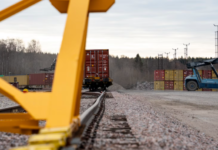
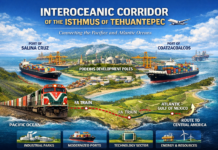
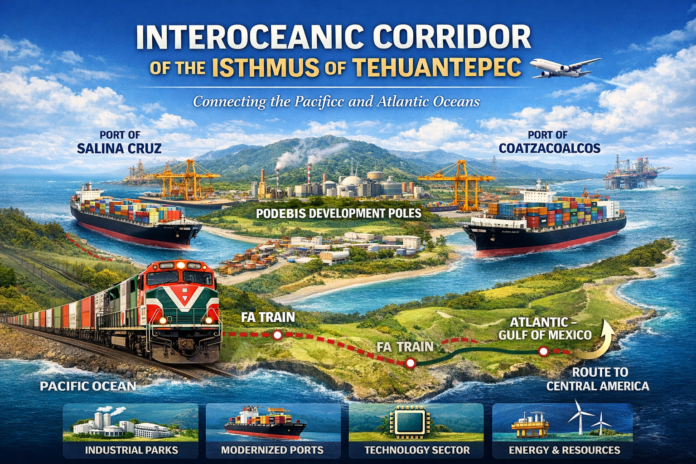
The corridor will function as a multimodal “dry canal.” It is shifting from construction to full logistics operations. It aims to compete with the Panama Canal.
Automotive Logistics Gains Momentum
The project has already proven its commercial potential. Hyundai Glovis completed a pilot shipment of 900 vehicles.
The company moved the cargo from Salina Cruz on the Pacific coast to Coatzacoalcos on the Gulf Coast. The rail journey took just nine hours. This is much faster than traditional canal transit.
Following this success, Mexico is prioritizing the corridor for automotive and electronics supply chains. These shipments target the U.S. East Coast.
Industrial Hubs Expand
Mexico has expanded the project’s industrial strategy. Authorities increased the number of Development Poles for Welfare (PODEBIS) from 10 to 14.
According to CIIT data:
- Nine hubs already operate under private concessions
- Coatzacoalcos I and II focus on vehicle and auto-parts distribution
- New hubs in Teapa and Tapachula strengthen links with Central America.
Energy and Infrastructure Integration
PEMEX has signed a cooperation agreement with CIIT. The deal integrates energy logistics with the corridor.
The agreement connects pipelines and refineries to a 1,200-kilometer rail network.
The Secretariat of the Navy (SEMAR) manages the corridor. It has deployed 2,400 security personnel. These teams protect cargo across Veracruz, Oaxaca, Tabasco, and Chiapas.
Rail Network Nears Completion
Construction continues across the three main rail lines:
- Line Z (Coatzacoalcos–Salina Cruz) is fully operational and increasing cargo volumes
- Line FA (Coatzacoalcos–Palenque) is active and connects to the Maya Train network
- Line K (Ixtepec–Guatemala) is over 87% complete and will launch soon.
A New Trade Artery for North America
Global shipping faces rising volatility. Mexico positions the CIIT as a reliable alternative.
The corridor offers a drought-resistant route for transcontinental trade. It aims to become a key logistics hub for North America.