
A joint delegation visit organised by Lübecker Hafen-Gesellschaft and Hafen Hamburg Marketing has reinforced cooperation between the ports of Klaipėda, Lübeck and Hamburg, with a focus on trade corridor development, supply chain resilience and Baltic Sea security.
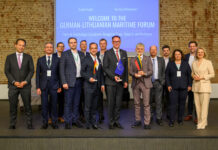
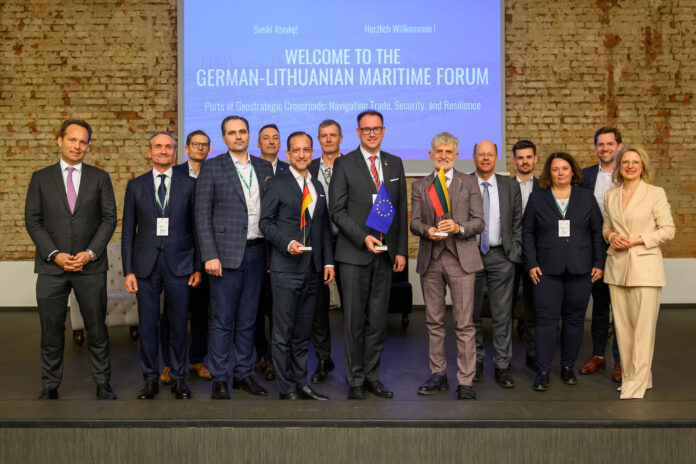
Held from March 18 to 20, 2026, the programme included political discussions, company visits and the German-Lithuanian Maritime Forum, which brought together more than 100 international participants from politics, the port industry and logistics.
The delegation was led by Lübeck Mayor Jan Lindenau and Niels Wiecker, Director of Port and Logistics at Hamburg’s Ministry of Economy, Labour and Innovation, and included around 25 representatives from the two German cities.
The forum’s guiding theme, ports at the geostrategic crossroads, framed discussions around trade expansion, security considerations and the resilience of Baltic supply chains.
Sebastian Jürgens, Managing Director of Lübecker Hafen-Gesellschaft, highlighted the significant modal shift potential on the Germany-Lithuania corridor, noting that Germany ranks first among Lithuania’s import partners and second in exports.
He argued that transferring more road freight to ferry and rail could reduce CO₂ emissions by approximately 70 percent while strengthening supply chain resilience.
Lübeck currently operates six weekly ferry departures to Klaipėda and approximately 60 weekly intermodal connections linking Lithuania and the Baltic states to Central and Southern Europe.
Trade volumes between Hamburg and Lithuania grew strongly in 2025, with direct container traffic reaching 142,000 TEU, a 15.4% increase year-on-year, making Lithuania Hamburg’s strongest trading partner in the Baltic region.
The strategic dimension of the cooperation has taken on added significance amid the current geopolitical environment.
Algis Latakas, Director General of the Klaipėda State Seaport Authority, disclosed that the port handled approximately 56,100 tonnes of military cargo in 2025, double the previous year’s volume, underscoring Klaipėda’s growing role in Baltic security logistics.
The port handled around 39 million tonnes of total cargo in 2025, representing approximately 40 percent of the combined throughput of the three Baltic states.
Mayor Lindenau described the visit as a catalyst for translating existing partnerships into concrete projects, with a return visit to Lübeck scheduled for early April as the next step in the cooperation process.