
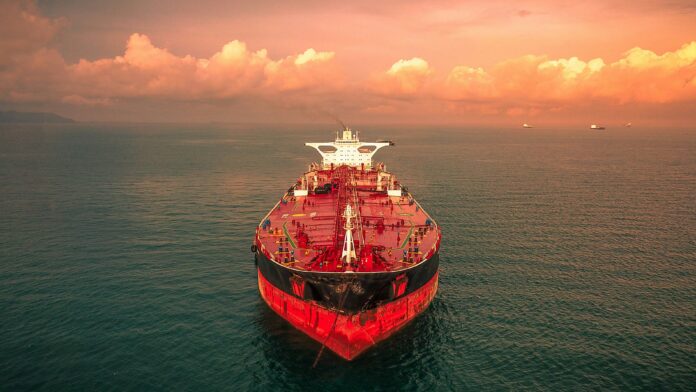
Japan Marine United Corporation (JMU) and Nippon Yusen Kaisha (NYK) signed a shipbuilding contract for a next-generation crude oil tanker. The vessel is scheduled for delivery in March 2026.
The contract includes an actual sea performance guarantee clause. The clause evaluates propulsion efficiency in real sea conditions. It aims to improve fuel efficiency and reduce greenhouse gas emissions.
JMU and NYK began developing this method in September 2020. The companies worked together to estimate vessel propulsion performance in actual sea conditions before construction. They created a technical and objective evaluation framework.
Most shipbuilding contracts guarantee vessel speed in calm weather and sea conditions. However, ships rarely operate under such ideal conditions. Estimating real performance has therefore remained a major industry challenge.
In 2020, JMU and NYK became the first companies to introduce an actual sea performance guarantee clause. They applied the framework to two newly built crude oil tankers. Later verification showed only a small difference between the guaranteed speed and the vessels’ actual performance.
The newly contracted tanker will feature improved actual sea performance. JMU and NYK will conduct joint verification during the vessel’s first year of operation. They will compare the guaranteed speed-power curve with real operational data.
The contract also includes an incentive mechanism. The system rewards both parties based on achieved performance. The companies say the framework improves the guarantee used for the previous vessels.
JMU and NYK will use insights from this initiative to support future vessel designs. They also plan to expand actual sea performance evaluation to other ship types.
Hull shape above the waterline strongly affects actual sea performance. The underwater hull shape mainly affects performance in calm seas. Shipyards often struggle to estimate real performance. Navigation routes, weather, and sea conditions remain unknown when contracts are signed.