

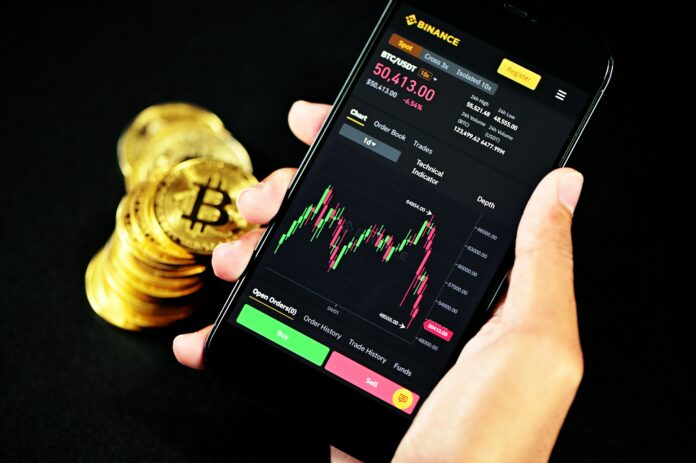
For anyone new to crypto trading, price charts can feel overwhelming at first. Lines, candles, indicators, and sudden price swings often raise more questions than answers. Yet learning how to read a BTC/USD chart is one of the most important skills for understanding how Bitcoin moves against the US dollar.
At its core, a chart is simply a visual record of price over time. It shows where buyers and sellers agreed on value, how sentiment shifted, and where momentum accelerated or faded. For beginners, the goal is not to predict every move, but to recognize basic patterns and signals that help explain what the market is doing right now.
Many traders start by observing the BTCUSD chart to see how Bitcoin behaves during different market conditions. By focusing on a few foundational concepts rather than dozens of indicators, new traders can build a clearer and more disciplined approach to reading price action.

Understanding the basics of a price chart
Before diving into patterns, it helps to understand what you are looking at.
A typical BTC/USD chart includes:
-
Price axis: Shows Bitcoin’s value in US dollars
-
Time axis: Shows how price changes over minutes, hours, days, or longer
-
Candlesticks: Each candle represents price movement during a specific time period
Candlesticks are especially useful for beginners because they show four key prices:
-
Open
-
High
-
Low
-
Close
Together, these values give a quick snapshot of market behavior during that time frame.
Choosing the right timeframe
Timeframes determine how much detail you see.
Common beginner-friendly timeframes include:
-
Daily charts: Useful for understanding the overall trend
-
4-hour charts: Balance between detail and clarity
-
1-hour charts: Show shorter-term price movement
Beginners are often better off starting with higher timeframes. They reduce noise and make patterns easier to identify.
Identifying trends
One of the first things traders look for on a BTC/USD chart is the trend.
There are three basic trend types:
-
Uptrend: Price makes higher highs and higher lows
-
Downtrend: Price makes lower highs and lower lows
-
Sideways (range-bound): Price moves within a defined range
Trading in the direction of the trend is generally considered safer for beginners than trying to predict reversals.
Support and resistance levels
Support and resistance are among the most widely used chart concepts.
-
Support: A price level where buying interest has historically appeared
-
Resistance: A price level where selling pressure has often increased
These levels act like psychological zones rather than exact numbers. When price approaches support or resistance, traders watch closely for signs of continuation or reversal.
Common chart patterns beginners should know
Some patterns appear frequently on BTC/USD charts and are relatively easy to recognize.
Double top and double bottom
-
A double top suggests weakening upward momentum
-
A double bottom may indicate selling pressure is fading
Head and shoulders
-
Often signals a potential trend reversal
-
The inverse version can suggest a shift from bearish to bullish momentum
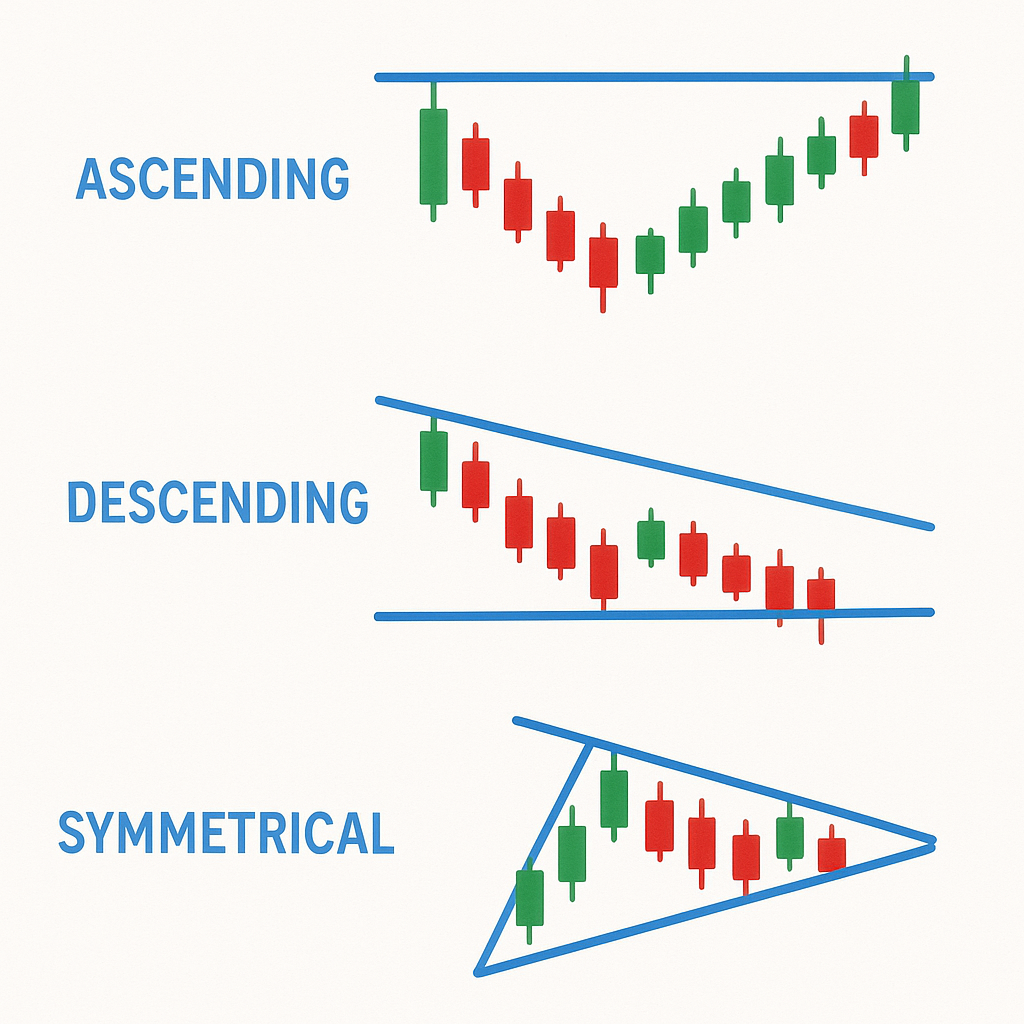
Triangles
-
Ascending triangles: Often associated with bullish continuation
-
Descending triangles: Often linked to bearish continuation
-
Symmetrical triangles: Signal consolidation before a breakout
These patterns do not guarantee outcomes, but they help traders frame expectations.
Volume: confirming price movement
Volume shows how much trading activity is happening.
Key beginner insights include:
-
Rising price with increasing volume often signals stronger conviction
-
Breakouts with low volume may fail
-
Declining volume during consolidation is common
Volume is best used as a confirmation tool rather than a standalone signal.
Simple indicators beginners can use
While charts can support many indicators, beginners are usually better off with just one or two.
Popular starter indicators include:
-
Moving averages: Help smooth price data and identify trend direction
-
Relative Strength Index (RSI): Helps gauge overbought or oversold conditions
The key is consistency. Using too many indicators often leads to conflicting signals.
Zoomex: Applying chart reading in real market conditions
Learning patterns in isolation is only part of the process. Traders also need to see how charts behave in live markets, especially during volatile periods such as economic data releases or sharp market moves.
In practice, many traders observe BTC/USD price action, volume changes, and trend behavior across active derivatives markets, including those available on platforms like Zoomex. Watching how price reacts around key support or resistance levels in real time can help beginners connect chart theory with actual market behavior.
This approach encourages observation and learning, rather than impulsive decision-making.
Common mistakes beginners make
When starting out, it helps to be aware of common pitfalls:
-
Overtrading based on small price movements
-
Relying on a single pattern without confirmation
-
Ignoring the broader trend
-
Using too many indicators at once
Chart reading improves with patience and repetition, not speed.
Final thoughts
Reading a BTC/USD chart is a skill that develops over time. For beginners, the focus should be on understanding trends, identifying basic patterns, and recognizing key support and resistance levels. These elements form the foundation for more advanced analysis later on.
By keeping charts simple and observing how price behaves under different conditions, new traders can gradually build confidence and discipline. Over time, chart reading becomes less about prediction and more about understanding market structure—an essential step for anyone looking to follow BTC/USD more closely.