

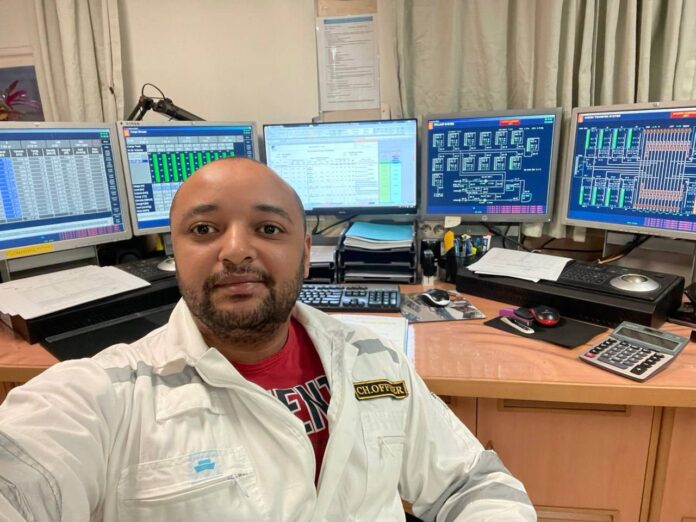
How Artur Chaykovskyy Is Bringing Greater Precision to Marine Petroleum Logistics and Onboard Blending
In maritime transport, the most expensive problems are not always the most visible. A discrepancy in cargo figures, a miscalculated additive ratio, an overlooked variance during reconciliation, or a communication gap between vessel and terminal can quickly turn into commercial losses, off-specification product, operational inefficiencies, and costly disputes.
For Artur Chaykovskyy, these are not abstract risks. They are precisely the type of issues he has spent his career learning to prevent, calculate, supervise, and resolve.
Today, Chaykovskyy is building his professional profile at the intersection of marine petroleum logistics, tanker cargo operations, onboard blending, and loss control. With more than 15 years of international maritime experience, including years aboard tanker vessels in progressively senior positions and later U.S.-based work in petroleum cargo supervision and marine operations, he represents a specialized category of maritime professional increasingly valuable to the industry: one who understands not only how petroleum cargo moves, but also how it is transformed, measured, reconciled, and protected throughout the voyage.
He currently serves in a senior cargo-operations role, works as a Cargo Superintendent, and is also Co-Founder of Sea Star Global Marine, a U.S.-based marine service company focused on cargo operations management, onboard blending, petroleum loss control, marine inspections, and technical marine support.
From Tanker Operations to Specialized Cargo Expertise
Chaykovskyy’s professional path began in the traditional world of maritime navigation and tanker operations. Over the course of his international career, he served on more than 20 tanker vessels, advancing from entry-level shipboard positions to the rank of Chief Officer. Those years gave him direct exposure to crude oil, petroleum product, chemical, and asphalt tanker operations across Europe, Asia, Africa, the Middle East, and trade routes connected to the United States.
That background gave him something especially important: a practical understanding that tanker work is not simply about moving cargo from one port to another. It is about preserving cargo integrity, controlling operational variables, and ensuring that what is delivered matches what was intended commercially and technically.
In liquid bulk shipping, even relatively small mistakes can have large consequences. A variance in quantity, an incorrect calculation, an additive imbalance, or an error in blending execution can affect not only the cargo itself, but the entire commercial chain behind it. This is particularly true when dealing with refined petroleum products that must meet specific performance and quality standards.
Over time, Chaykovskyy developed deep expertise in this part of the business – not only in cargo handling and reconciliation, but in the more technically demanding area of onboard blending.
Why Onboard Blending Matters
One of the most specialized aspects of petroleum cargo operations is the ability to perform onboard blending correctly.
In practical terms, onboard blending involves combining base products and additives in carefully calculated proportions in order to obtain a required final specification. This is not a generic cargo-handling function. It requires technical judgment, product knowledge, accurate calculations, operational coordination, and careful supervision during execution.
For example, a client may require a higher-grade gasoline or a seasonal diesel product that does not exist as a single preloaded cargo. In such cases, the task is to take a base product and, through the addition of specific components or additives in correct proportions, create the required finished fuel onboard the vessel. The objective is not only to mix products, but to achieve the right quality, consistency, and specification outcome.
This is one of the areas in which Chaykovskyy has developed particularly valuable hands-on expertise.
His work involves understanding how different petroleum products interact, how proportions should be calculated, how the blending process should be supervised operationally, and how to ensure that the resulting cargo meets the intended commercial and technical requirements. In that sense, onboard blending is not simply an operational task. It is a highly specialized process that sits at the intersection of marine logistics, fuel specification control, and cargo accountability.
More Than Loss Control
Although petroleum loss control remains an important part of Chaykovskyy’s professional profile, it does not fully capture the scope of his expertise.
Loss control is often understood as the verification and analysis of cargo quantities, discrepancies, and reconciliation issues. It is an important function, especially in petroleum operations, where small unexplained differences may create financial exposure, claims, or disputes. Chaykovskyy’s experience in this area includes the identification of quantity variances, cargo reconciliation, terminal interface work, and the operational interpretation of discrepancies.
However, his specialization goes further than that.
What makes his profile particularly distinctive is that he is also involved in creating the correct cargo outcome, not only measuring or protecting it afterward. In onboard blending operations, the challenge is not simply to avoid loss, but to engineer the right cargo composition onboard the vessel through accurate calculation, controlled mixing, and disciplined execution.
This requires a different level of technical sophistication. It means understanding not only where cargo may be lost or misreported, but how petroleum products can be combined to produce a final fuel that meets required standards. In many cases, this work directly supports the transformation of one grade of fuel into another through carefully controlled onboard processes.
That combination – loss control plus onboard blending expertise – is one of the reasons Chaykovskyy occupies such a specialized niche within marine petroleum logistics.
A Specialist at the Intersection of Vessel, Cargo, and Specification
Modern petroleum shipping increasingly depends on specialists who can bridge multiple layers of the process. Cargo today is not only transported; it is measured, verified, adjusted, documented, and expected to meet precise operational and commercial requirements.
Chaykovskyy’s experience places him exactly at that intersection.
He understands the shipboard realities of tanker operations. He understands the coordination required with terminals. He understands the commercial consequences of specification failure or quantity discrepancies. And he understands how blending and cargo control must be executed in real operating conditions, not just on paper.
That matters because the industry increasingly needs professionals who can translate operational detail into commercial reliability. Vessel operators, cargo interests, and marine service providers all depend on specialists who can reduce uncertainty, support cargo integrity, and ensure that the final delivered product is both measurable and marketable.
Sea Star Global Marine and a More Specialized Service Model
This philosophy is also reflected in Sea Star Global Marine, the company Chaykovskyy co-founded in the United States.
The company operates in a specialized area of marine services that includes cargo operations management, onboard blending, petroleum loss control, marine inspections and audits, draft and bunker surveys, and technical marine support. Its work is designed for clients who need more than routine attendance or generic marine services. They need technical oversight, operational accuracy, and confidence that cargo-related processes are being handled by professionals with real tanker and petroleum experience.
Onboard blending is one of the company’s important service areas because it reflects exactly the type of high-value operational niche where specialized knowledge makes a major difference. The work requires accurate proportional calculations, understanding of cargo chemistry and additives, correct execution during onboard operations, and clear control over the resulting product.
In addition, Chaykovskyy has also contributed to practical digital solutions related to loss control automation, cargo blending support, draft survey reporting, and bunker survey analysis. These efforts reflect a broader need within shipping: to move away from fragmented manual workflows and toward more structured and reliable cargo-management processes.
Why This Expertise Is Increasingly Valuable
As marine petroleum logistics becomes more complex, the value of hybrid specialists continues to grow.
The industry no longer relies only on people who can move cargo. It increasingly depends on people who can preserve product value, support cargo transformation, reduce risk, and ensure that the commercial expectations behind the cargo are actually met in practice.
This is especially true in areas like onboard blending, where an operation must be executed with precision in order to produce a specific result. The challenge is not merely transportation. It is controlled product creation within a marine environment.
Chaykovskyy’s profile stands out because he combines shipboard command-level tanker experience, U.S.-based cargo operations practice, petroleum loss control expertise, and hands-on onboard blending knowledge. That combination is still relatively rare – and it is exactly the kind of expertise that becomes more valuable as shipping moves toward higher levels of technical accountability and commercial precision.
Looking Ahead
As the maritime sector continues to evolve, specialists like Artur Chaykovskyy are likely to play an increasingly important role in shaping how petroleum cargo is managed, protected, and optimized.
His work reflects a deeper shift in the industry: away from viewing cargo as a passive commodity and toward understanding it as something that must be actively controlled, reconciled, and, in some cases, technically refined in transit.
For shipping and marine service stakeholders, that kind of expertise is no longer optional. It is becoming essential.
And for Chaykovskyy, onboard blending is a clear example of why. In his world, success is not only about whether the cargo arrived. It is about whether the right cargo was created, preserved, and delivered.