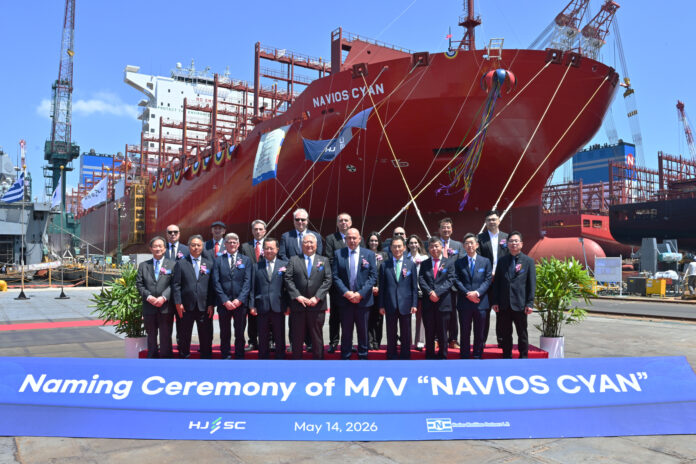
HJ Shipbuilding & Construction (HJSC) held a christening ceremony for a new 7,900-TEU container ship at its Yeongdo Shipyard in Busan.
The vessel was officially named NAVIOS CYAN during the ceremony attended by around 50 guests, including Shunji Sasada, Vice Chairman of Navios Maritime, and HJSC CEO Yoo Sang-cheol.
The ship is the first in a series of four 7,900-TEU container vessels ordered by Navios Maritime. HJSC originally secured an order for two ships in 2024 before the owner exercised options for two additional vessels.
HJSC said all four vessels will be built and delivered from its Yeongdo Shipyard in Busan.
The South Korean shipbuilder delivered NAVIOS CYAN more than two months ahead of schedule, highlighting the company’s project management and shipbuilding capabilities.
The vessel includes several eco-friendly features. It is equipped with a scrubber system that complies with IMO environmental regulations and is designed for future conversion to methanol fuel.
HJSC also used advanced 3D hull design technology to maximize container loading capacity.
The company said it continues to strengthen its position in the eco-friendly container ship sector. Since resuming commercial shipbuilding in 2012, HJSC has expanded its portfolio with LNG dual-fuel and methanol dual-fuel container vessels.
CEO Yoo Sang-cheol said the vessel includes multiple eco-friendly solutions designed to help shipowners respond to changing market demands.
“We will continue to build a strong track record by delivering high-quality vessels that meet both customer expectations and increasingly stringent environmental regulations,” Yoo stated.
HJSC plans to further expand its presence in the 6,000- to 10,000-TEU container ship market with vessels designed to support carbon neutrality goals.