
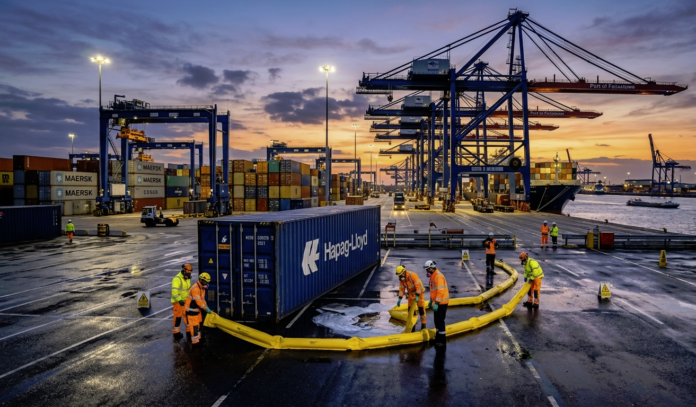
The primary risk to container terminal efficiency isn’t just a bottleneck at the gate or a crane malfunction; it is the sudden, volatile disruption of a hazardous material leak. In a high-volume port environment, a single compromised drum or a faulty valve during fuel transfer can trigger an immediate operational lockdown. To maintain continuity, terminal operators must shift from reactive cleanup mentalities to proactive containment frameworks that prioritize speed and specialized remediation.
Recognizing the Risks
More than 5 million containers carrying hazardous materials pass through global port facilities every year, and accidents are relatively rare but not unheard of. While many of these are minor leaks, the density of modern large-scale “mega-terminals”, such as major hubs like the Port of New York and New Jersey, means that any chemical release can migrate into drainage systems or marine environments within minutes.
Terminal managers often underestimate how quickly a localized pallet leak can escalate into a regional environmental crisis if the initial response is handled by untrained general labor rather than by a professional chemical spill cleanup service that understands the cargo’s chemistry. Expert assistance must be a priority, or the repercussions of a spill might be exacerbated.
Identifying the Primary Hazards in Cargo Handling
Hazardous spills in terminals rarely happen in a vacuum; they are typically the result of mechanical failure or improper lashing during the “last mile” of ship-to-shore movement. When a container is jarred by a reach stacker or a quay crane, the internal contents can shift, leading to punctures that aren’t visible until the box is staged in the yard. This hidden danger is why secondary containment and specialized bunding in storage zones are non-negotiable for modern safety compliance.
Fuel bunkering and equipment maintenance also present constant threats to terminal soil and water quality. The sheer volume of lubricants and hydraulic fluids required to keep a fleet of straddle carriers and AGVs running creates a distributed risk across the entire facility. If a hose bursts during a ship-to-shore fuel transfer, the volume of the release can overwhelm standard on-site spill kits, necessitating a heavy-duty industrial intervention.
Strategic Risk Mitigation Frameworks
Effective risk management relies on a tiered response strategy that differentiates between a nuisance leak and a high-threat chemical release. Modern terminals are increasingly using IoT sensors and other tech to detect volatile organic compounds in the air near chemical storage blocks, providing early warning before a human inspector even spots a puddle. This technical layer must be supported by physical infrastructure designed to funnel runoff into dedicated holding tanks rather than the harbor.
Port authorities are currently focusing on several key areas to reduce the frequency and impact of these events:
- Implementation of automated terminal operating systems that flag “hot boxes” containing Class 3 or Class 8 materials for isolated staging
- Designation of specific “red zones” for the inspection of leaking containers that are equipped with specialized drainage and vapor suppression systems
- Scheduled integrity testing for all land-side fuel pipelines and storage tanks to identify corrosion before a catastrophic failure occurs
Recent findings show that nearly 32% of port-related incidents are linked directly to hazardous material leaks during the transfer process. This statistic highlights a critical gap in the transition between sea-leg transport and land-side logistics. When a vessel arrives with compromised cargo, the terminal becomes the de facto first responder, inheriting a liability that requires immediate expert assessment to prevent the spread of toxins into the local water table.
Navigating Regulatory and Environmental Consequences
The aftermath of a spill is often more expensive than the physical cleanup itself due to the cascading costs of regulatory fines and terminal downtime. Agencies such as the IMO and local environmental protection departments have shortened the window for mandatory reporting, leaving an operator very little time to assess the situation before the legal clock starts ticking. If a spill reaches the water, the complexity of the remediation increases tenfold, often involving multiple state and federal jurisdictions.
Beyond the fines, the reputational damage of a major chemical release can impact a terminal’s standing with global shipping lines. Carriers prioritize ports that can guarantee “clean” operations, as they cannot afford to have their vessels impounded or delayed by a neighbor’s hazardous waste mismanagement. High-fidelity documentation of the cleanup process is essential for insurance subrogation, demonstrating that the terminal exercised due diligence to mitigate the impact.
The Impact of Transition Fuels on Port Safety
As the maritime industry moves toward decarbonization, new risks are emerging in the terminal ecosystem, including alternative fuels such as ammonia and hydrogen. A 2026 report on handling transition fuels points out that these substances behave very differently from traditional heavy fuel oil. Ammonia, for instance, presents a severe inhalation hazard that requires specialized PPE and exclusion zones that can span several hundred yards, effectively paralyzing a terminal during a leak.
These emerging threats require a rewrite of the traditional spill response playbook. It is no longer enough to have bags of absorbent material and some booms on a trailer; personnel must be trained in the specific thermal and toxicological profiles of these new energy sources. As terminals become “energy hubs,” the distinction between a logistics center and a chemical processing plant blurs, necessitating a much higher standard of hazardous-material oversight.
Strengthening Your Emergency Response Protocols
Reviewing your current hazardous material handling procedures is the first step toward building a more resilient operation. Check our other guides on container terminal operations management and a whole host of logistical topics right here on the site.