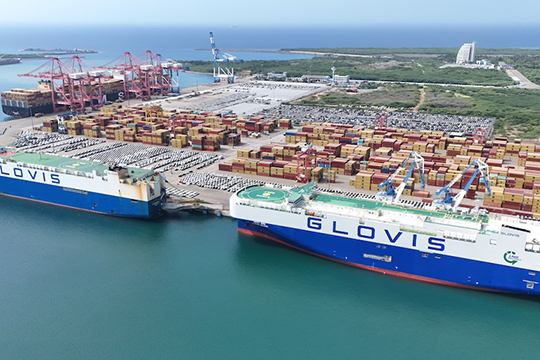
Hambantota International Port (HIP) delivered strong growth in 2025, despite a challenging year for the global port industry.
Total cargo volumes rose 175% year on year. Throughput reached 8.24 million metric tonnes, up from 3.0 million metric tonnes in 2024. Growth came from containers, RORO, and bulk cargo, even as global trade faced volatility, congestion, and higher costs.
Container traffic drove the largest gains. Volumes jumped from 53,170 TEUs to 428,036 TEUs in one year. Containerised cargo tonnage climbed from 657,504 metric tonnes to 5.43 million metric tonnes. The surge positioned HIP as a fast-emerging container gateway.
The port is expanding capacity to meet demand. The second development phase will be completed by the end of 2026. It will raise annual container capacity to around 2 million TEUs. The plan includes four dedicated container berths, six quay cranes, and sixteen rubber-tyred gantry cranes.
RORO operations also grew. HIP handled 726,153 units in 2025, up from 579,362 units a year earlier. RORO tonnage increased 25% to 965,783 metric tonnes. Automotive and project cargo supported volumes.
Bulk and break bulk cargo rose 32% to 1.18 million metric tonnes. The growth strengthened the port’s role in industrial and infrastructure supply chains. Oil and gas volumes stayed broadly flat at 661,131 metric tonnes, reflecting softer energy markets.
“2025 was not an easy year to be a port,” said Wilson Qu, CEO of Hambantota International Port Group. “These results show customer confidence, operational flexibility, and the dedication of our team.”
HIP enters 2026 with strong momentum. The port aims to sustain growth across container, RORO, and bulk segments while supporting regional trade and economic development.