
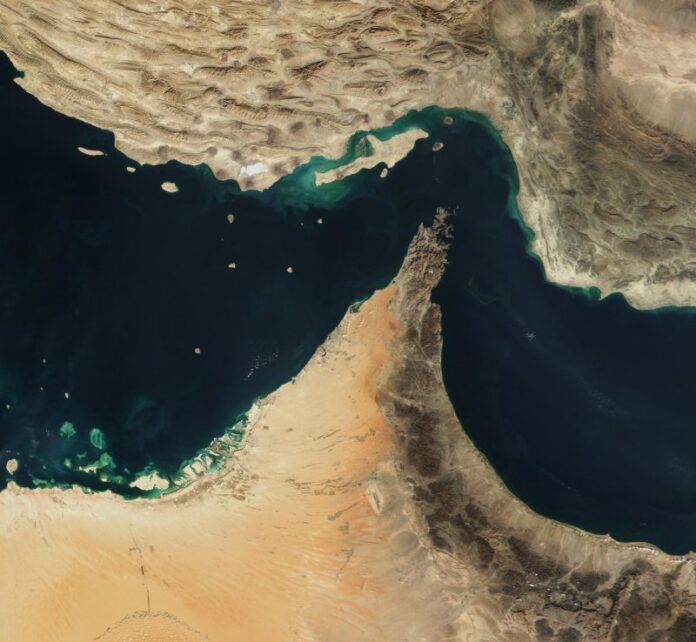
The number of vessels transiting the Strait of Hormuz remains minimal, though it has increased in the last week as Iran announced it is allowing non-enemy vessels to pass.
Container traffic to the Gulf States has found alternate but ultimately insufficient routes. Most carriers are relying on ports on the west coast of India as tranship hubs and shuttle services to accessible ports in Oman and the UAE – with some also using north Red Sea transits to Jeddah, especially for volumes out of Europe – and road transport on to the final destinations.
But these port and road alternatives are not designed to handle these types of volumes, and in addition to the expense – Freightos Terminal shows Shanghai – Jebel Ali rates are now above $7,000/FEU – the routes are being plagued with delays and congestion. Vessels arriving at the UAE’s Khor Fakkan port are reportedly facing more than week-long waits for a berth with some being turned away, and truck shortages are delaying road transport as well.
But even as we approach a month since the start of the war, the container market beyond the Gulf region has not faced operational disruptions. And so far, container rates on the major lanes haven’t increased much either, with transpacific prices up just 3% last week to $2,100/FEU to the West Coast and 4% to $3,100/FEU to the East Coast. Asia – Europe rates were unchanged at $2,870/FEU to N. Europe and $4,264/FEU to the Mediterranean.
Carries have announced emergency fuel surcharges across lanes ranging from $200 to $500/FEU most of which will only go into effect in the coming days. They have also announced a long list of PSSs and GRIs – most set for early April – for non-Gulf lanes, including about $2,000/FEU rate increases for Asia – Europe lanes, though CMA CGM recently reduced its increase by about $700/FEU.
So container rates may be set to climb on across the board fuel surcharges soon, and possibly spike more significantly via other rate increases on some lanes to start April too. But there are some signs of pushback against the Strait of Hormuz closure driving rates up too far on non-impacted lanes.
Besides shipper concerns that contracted BCOs who pay the emergency fuel surcharges may be double charged when BAFs are updated for Q3, the US FMC just rejected an early-March request by some carriers to waive the 30-day notice period for fuel surcharges because carriers did not provide data showing that the rate increases were reasonably related to cost increases. Indian authorities have also opened a streamlined channel to hear complaints of predatory logistics pricing.
Carriers – after a tepid post-Lunar New Year period from a volume perspective – are also facing the challenge of slumping demand as slow season begins. Rate behavior in the next few weeks then, should reflect which rate increases carriers try to introduce, and their degrees of success.
In air cargo, Gulf carriers continue their gradual schedule recovery. Qatar Airways – whose Doha operations were largely suspended since the start of the war as airspace was closed – started a partial reopening this week including about forty five weekly freighter flights, alongside many passenger services as Qatari airspace starts to reopen. The UAE began reopening its airspace soon after the war began, with Emirates Skycargo announcing more than 150 scheduled freighters for this week.
But despite the continued Gulf carrier capacity recovery and European and Asian carriers adding Asia – Europe flights, capacity out of the Middle East, and Asia – Europe tonnage are still much lower than a year ago.
Air rates which had spiked on many Middle East lanes, and Asia – Europe routes early in the war – as capacity out of the Gulf dropped and volumes shifted to direct Asia – Europe services – had leveled off last week. This week though, rates on some lanes have started climbing again, possibly reflecting the first reports of backlogs developing across major hubs, and updated fuel surcharges as fuel costs continue to rise. South East Asia – Europe prices up 17% since last week to more than $5.00/kg, China – Europe rates up 23% to $5.00/kg too, China – US prices up 9% to $7.43/kg and Europe – Middle East rates up 14% to $3.18/kg.