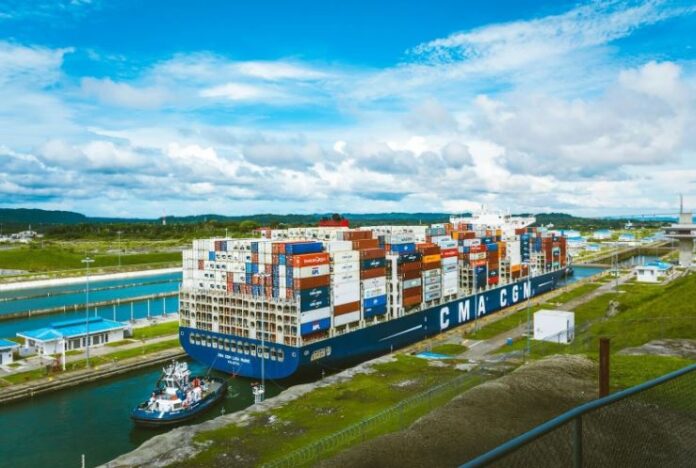
Through the standardization of containerized delivery, global trade can now transport virtually any commodity with minimal overhead. The global maritime shipping market, currently valued at over $100 billion, is experiencing an upward trajectory. In terms of volume, more than 80% of the world’s goods are carried by sea. Is containerization truly that effective? Absolutely! For businesses, understanding why maritime logistics is a top-tier choice is a competitive necessity.
Types of Container Transportation and Their Use Cases
By cargo type, shipments are categorized as:
- General Cargo: Goods in packaging, boxes, or on pallets.
- Liquid Bulk: Various liquids and fluids.
- Dry Bulk: Commodities like grain, fertilizers, and sugar.
- Hazardous Materials: Chemicals or flammable substances.
- Oversized (OOG): Cargo that exceeds standard dimensions.
By loading type:
- FCL (Full Container Load): The entire capacity of a 20-foot or 40-foot container is reserved for one shipper. With usable volumes of 33 m³ and 67 m³, this is the gold standard for large consignments.
- LCL (Less than Container Load / Consolidation): If a shipment doesn’t fill an entire container, it is grouped with lots from other senders. In this case, the business pays only for the volume actually occupied.
By delivery method:
- Intermodal Transport: The container travels from origin to destination without the cargo handling and switching modes (e.g., a China–Hamburg route).
- Multimodal Transport: Involves the use of multiple modes of transport under a single contract, such as a sea-rail combination.
By schedule:
- Liner (Regular): Operating on fixed, popular routes.
- Charter: On-demand services, primarily used for transporting oil and petroleum products.
From reefers to tankers and flat-racks, the variety of specialized containers ensures that a supply chain can be built for almost any product on the planet.
Sea, Rail, Road, and Multimodal Container Transport
While the iconic image of a massive vessel carrying thousands of units across the ocean is what most people associate with the industry, container shipping is a versatile beast that utilizes various modes of transport.
Maritime transport remains the most popular and cost-effective method for intercontinental routes. Containers are secured to the deck and to each other using specialized locking systems. The largest modern “titans of the sea” can carry up to 24,000 TEU (Twenty-foot Equivalent Units).
Rail transport is another heavy hitter. To ensure the container stays put, it is secured to the platform using fitting stops and Twistlock mechanisms. This reliability makes rail ideal for moving large volumes, including oversized cargo, over long inland distances where sea routes aren’t an option.
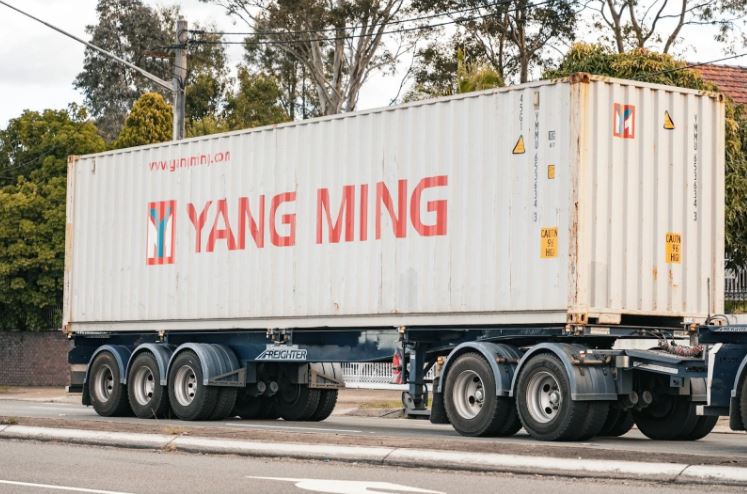
Road delivery doesn’t use your average semi-truck. Instead, it relies on container chassis — reinforced steel frames without sides or a roof, specifically designed to stabilize 20 or 40-foot units. Just like on the tracks, the container is locked down via twistlocks.
However, a single mode of transport isn’t always the “magic bullet” for import or export. This is where multimodal schemes shine. Logistics providers like DiFFreight orchestrate deliveries from China, the USA, and Europe across multiple directions, implementing multimodal strategies to optimize both costs and lead times.
Key Advantages of Containerized Shipping
Why do businesses consistently bet on this format?
- Versatility: All units are standardized by size, volume, and attachment points. Handling is strictly regulated at every stage, from the terminal to the port of discharge.
- Security: Goods are shielded from the elements and mechanical damage. Minimal vibration levels make it safe to transport everything from sensitive electronics to glassware.
- Clear Documentation: In maritime shipping, the question of “who pays for what?” is never a mystery. Responsibilities and financial obligations are defined by Incoterms. The process is anchored by the Bill of Lading, which serves as a document of title and confirms the carrier’s liability.
- Tracking: Modern technology allows you to track a container ship even in the middle of the open ocean. Freight forwarders and cargo owners always have a clear picture of the Estimated Time of Arrival (ETA).
- Cost-Efficiency: Thanks to massive scale and automation, the freight rate per ton is the lowest among all transport methods.
In short, container shipping remains the undisputed leader of global logistics — reliable, scalable, and budget-friendly.
Challenges and Risks in Container Transportation
Even in a well-oiled machine,some variables can impact a business:
- Port congestion and delays.
- Shortages of empty units during peak seasons, which can cause tariffs to spike.
- Risks associated with incorrect documentation, leading to customs hold-ups and fines.
- Weather conditions: While storms can force route changes or, in rare cases, lead to containers going overboard, maritime insurance exists to mitigate these specific risks.
Today, containers are the most rational way to organize transit across continents or over vast distances. With expert planning, you can bypass unplanned port storage fees, delays, and customs headaches. By choosing container shipping, you are plugging into a global infrastructure designed to give your business every possible advantage.