Svitzer, the global towage operator, has signed a shipbuilding agreement with Cochin Shipyard Limited (CSL) for the construction of next-generation, battery-electric TRAnsverse tugs as part of its fleet renewal and growth strategy.
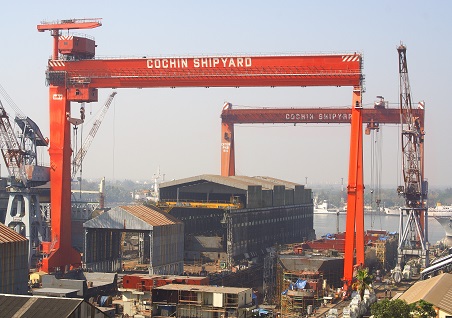
Under the agreement, CSL will build four 26-metre electric TRAnsverse 2600E tugs in India, with an option for up to four additional vessels. The tugs will be constructed at CSL’s Cochin facilities to Svitzer’s specifications and are intended for deployment across Svitzer’s global operations.
The contract formalizes a Letter of Intent signed in October 2025 during India Maritime Week, marking the transition from initial intent to a firm newbuilding agreement.
The TRAnsverse 2600E tugs are the fully electric version of Svitzer’s next-generation TRAnsverse design, which the company describes as one of the most advanced and efficient tug platforms currently in operation. Designed for complex and close-quarter manoeuvring, the vessels are capable of operating across a wide range of ship types and sizes, including in challenging weather and tidal conditions.
Equipped with battery-electric propulsion, the tugs will deliver zero direct emissions during harbour operations when charged using green power sources. The design features a patented staple with a double-ended hull and in-line propulsion, providing omni-directional thrust and expanding the operational towage envelope by up to 50%.
The agreement brings together Svitzer’s expertise in advanced and sustainable towage solutions with CSL’s shipbuilding capabilities, skilled workforce and local innovation. It also supports India’s ambition to strengthen its position as a global maritime manufacturing and skills hub, in line with Maritime India Vision 2030, Maritime Amrit Kaal Vision 2047, and the “Make in India” initiative.
Svitzer said the newbuildings complement its broader TRAnsverse tug construction programme and reflect continued confidence in the design’s performance, while also opening opportunities for future deployment in Indian ports and terminals.