
CMA CGM has deployed emergency multimodal transport solutions to maintain supply chains in the United Arab Emirates and northern Gulf region, while avoiding transit through the Strait of Hormuz.
The move comes amid ongoing security concerns and navigational restrictions affecting maritime traffic in the region.
Alternative Logistics Corridors
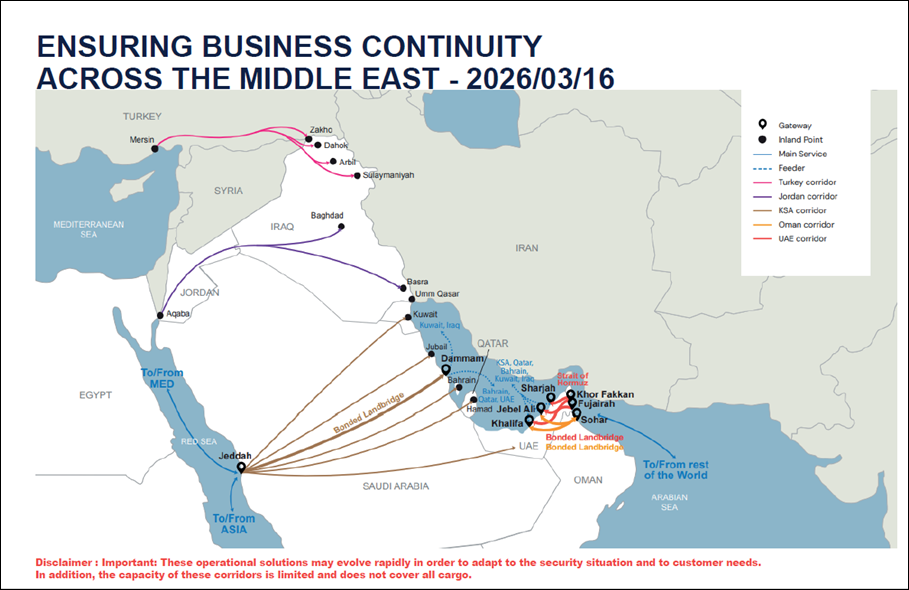
CMA CGM is using a combination of sea, road, and rail transport to ensure cargo flow across key Gulf markets, including Iraq, Bahrain, Qatar, Kuwait, and Saudi Arabia.
Key entry points include:
-
Khor Fakkan, Fujairah, and Sohar (south of the Strait of Hormuz)
-
Jeddah on the Red Sea
From these ports, cargo moves inland via dedicated road and feeder networks.
UAE and Gulf Connectivity
From UAE-based corridors, CMA CGM connects cargo to major hubs such as:
-
Khalifa Port
-
Jebel Ali
-
Sharjah
These routes extend to other Gulf countries using integrated land and short-sea transport solutions.
Saudi Arabia and Oman Routes
The Jeddah corridor provides an alternative route via Saudi Arabia, linking to Dammam and onward to the Gulf. It also connects trade flows between Asia and the Mediterranean without exposure to the Strait of Hormuz.
In parallel, CMA CGM uses ports in Oman to offer additional road-based solutions into the UAE and northern Gulf markets.
Ensuring Supply Chain Continuity
With these multimodal solutions, CMA CGM aims to maintain trade continuity, reduce risk exposure, and support regional supply chains during ongoing geopolitical disruptions.
The company said the initiative highlights its ability to adapt quickly and provide flexible, secure logistics solutions in a volatile operating environment.