
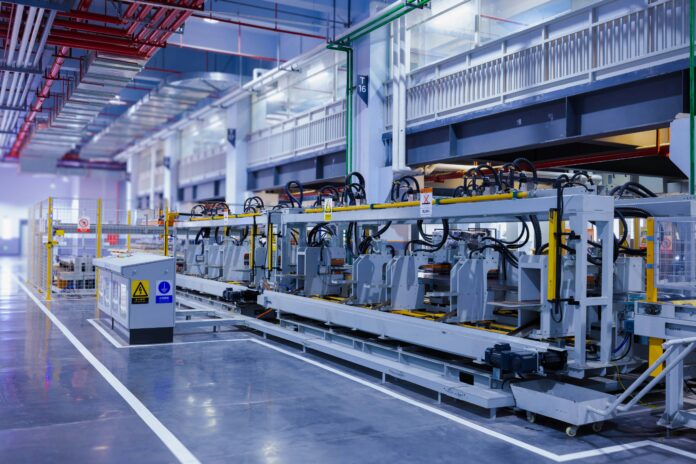
The idea behind automation is pretty simple – if you remove human judgment and replace it with systems, you’ll have faster moves/decisions and fewer (human) errors.
And of course, that idea works perfectly… but only in theory.
Automation – at least when it comes to shipping and logistics containers – was introduced/designed to tackle specific operational problems (e.g., legacy assumptions carried forward, poor data quality being treated as ‘reliable’, lack of input verification, reduced visibility into decision logic, accountability, consistency > correctness, etc., etc.), but instead, what happened was that automation actually made things more complicated, instead of solving them.
The thing with automated systems is that they don’t question what you give them; they inherit it. The same estimates from years ago are still here, as are shortcuts and assumptions that made operations what they were. The only real difference is scale. Now, when an assumption is wrong, it’s not wrong once but thousands of times in a row.
It’s not that hard to see why automation wasn’t able to eradicate the most stubborn problems in terminals.
It didn’t eliminate judgment; it only moved it upstream, where it’s harder to see.
Bad Data = Bigger Problems
The real problem with automation systems comes from the data they are being fed. If they get bad/inaccurate data, they’ll treat it as the real thing, plus they’ll base their decisions on it.
Terminals deal with a lot of information on data and load every day, and not all of that information is created the same way. You have some numbers declared on paperwork, and others are estimated during planning. There are also ones that the software indirectly calculates, and then there’s a small portion that’s actually measured.
The problems start when all of this data is entered into the system.
As far as the software is concerned, there’s no difference between a rough estimate and a verified number. It won’t ask where the number came from, or if it’s really correct. It simply assumes the input is good and keeps things moving. This is great for speed, but not so great for accuracy because, when systems treat potentially iffy data as fact, they make small errors that don’t stand out right away.
They blend in and affect the decisions in the background.
This is why it’s handy to manually check loads during the actual lift (or the handling procedure); this results in better data. Basically, less guesswork is involved, which doesn’t open you up to inaccurate decisions later down the line.
In those cases, they’ll use tools like crane scales to confirm what’s being lifted. This way, the system will receive real values instead of estimated or declared values. This helps reduce cumulative planning errors and prevents automation from repeating incorrect decisions. All of one device.
This is why manual (human) input is mandatory, or at least, it should be. You can’t get ‘good’ data only from automation.
Most of the time, though, this doesn’t happen, and you rely on systems that don’t differentiate what’s measured from what’s estimated, which results in quite a few mistakes.
The worst part is that you can’t see those mistakes right away and, by the time the impact of them becomes visible, the system has already made that same mistake many times.
Why Old Assumptions Stick
It’s not that nobody notices old assumptions. They do, but in many terminals, they also make daily operations easier.
Think about it – once an assumption is part of a system, there won’t really be any pressure to change it. And automation? It won’t challenge/question you on it; it’ll actually reinforce the entire thing.
Speed Comes First
Terminals live and die by flow.
Turnaround time, crane moves per hour, yard utilization, these are all numbers everyone watches. And if there’s anything clogging thighs down, or even bringing certain operations to a halt, it breaks the flow, the harmony. This is the reason why, even if you have a ‘more accurate’ way of doing things, harmony/flow will be prioritized over accuracy. Accuracy can only be allowed in terms of safety, or if speed isn’t negatively affected.
Once automation was introduced, both the good and the bad became more obvious.
Systems are designed to keep it all moving without stopping to check inputs. And once a process runs smoothly, nobody wants to mess that up, even if the reason for that smoothness is rough assumptions.
Responsibility Gets Blurry
Assumptions also spread responsibility.
When you estimate a number or pass it along through multiple hands, no single party fully owns it, so who’s truly responsible for it? Nobody. And this is a massive red flag.
But when you introduce accurate, verifiable inputs, you’ll have pointers tracing back to the specific operator (or system) that tend to point back to a specific system or operator. This allows you to determine accountability, which otherwise wouldn’t be possible.
Consistency
When inputs behave the same way every time, the systems work the best.
Averages, defaults, it all reduces friction and keeps planning stable. Accurate data, on the other hand, can be messy with its spikes and variations. It would force adjustments, while consistent numbers don’t, even if that consistency doesn’t mean the numbers are correct.
And as time goes on, consistency hides uncertainty, so everything looks like it’s under control.
Conclusion
Even though shipping and logistics sound like chaos, there’s actually perfect harmony in the way it works. Otherwise, it’d all fall apart.
And when you introduce automation to the entire thing, you make it better.
Is it then perfect? No, not really. It’s functional. And this mostly has to do with bad data. Automation works based on the data you give it. And if you feed it bad data, it’ll produce the same quality of work – bad.
So, what can you do? Should we stick with the old ways that are perhaps less efficient, but they work? No, of course not.
If there are issues after automation has been introduced, this means that there’s bad data coming your way. Your job, the human job, is to find where the bad data is common and fix it. After that, you’re bound to see improvements.