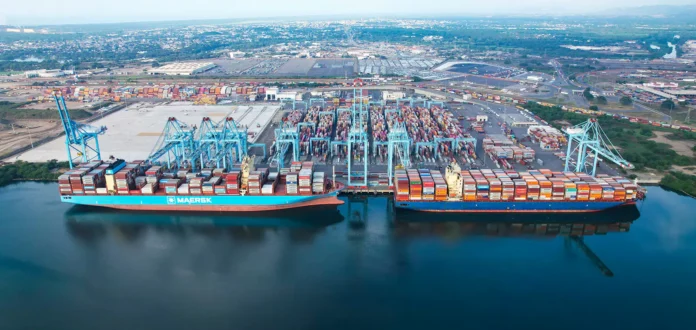
APM Terminals Lázaro Cárdenas has inaugurated the second phase of its container terminal and confirmed the immediate start of Phase III. The new stage comes with an investment of more than USD 350 million, reinforcing the port’s role as a strategic trade hub on Mexico’s Pacific coast.
Phase II, built with an investment of over USD 140 million, expands the terminal to 65 hectares and increases annual capacity to 2 million TEU. The facility now ranks among the most advanced logistics platforms in Latin America, supported by high automation, electrification and clean energy use.
The newly commissioned area includes six electric automated rail-mounted gantry cranes, high-efficiency shuttle carriers and advanced traceability systems. These upgrades improve movement precision, enhance safety and increase reliability for customers and port users.
Beatriz Yera, Managing Director of APM Terminals Mexico, said the terminal remains the only fully automated container yard in Latin America. “With Phase III we plan to add 450 meters of berth, reaching 1,200 meters of total quay length. This forms part of our long-term strategy to support Mexico’s growing foreign trade,” she noted.
Leo Huisman, Regional Managing Director for the Americas, highlighted the terminal’s alignment with APM Terminals’ global decarbonisation goals. He said the facility aims to operate with fully electric mobile equipment and renewable energy sources in the medium term, positioning it as a pioneer in Mexico’s port sector.
Phase III: Early Expansion to Handle Rising Trade
Phase III will extend the berth, expand the yard and introduce new STS cranes to handle the world’s largest container vessels. The development brings forward additional port capacity by almost eight years compared with the original plan. The upgrade aims to strengthen Lázaro Cárdenas’ position as a major transshipment hub in the Pacific.
The investment also boosts the port’s productivity, flexibility and competitiveness, reinforcing its role in regional and global supply chains.
Economic Impact
APM Terminals expects the expansion to generate significant economic benefits. By 2029, the terminal will support more than 1,700 direct jobs. Construction of Phase III alone is expected to create around 4,000 direct and indirect jobs, supporting local supply chains in construction, maintenance, transport and specialised services.
The project also strengthens procurement opportunities for companies across Michoacán and the wider Pacific logistics corridor.
With these developments, APM Terminals Mexico reaffirms its long-term commitment to national port infrastructure and to positioning Mexico as a key logistics actor in regional and international trade.